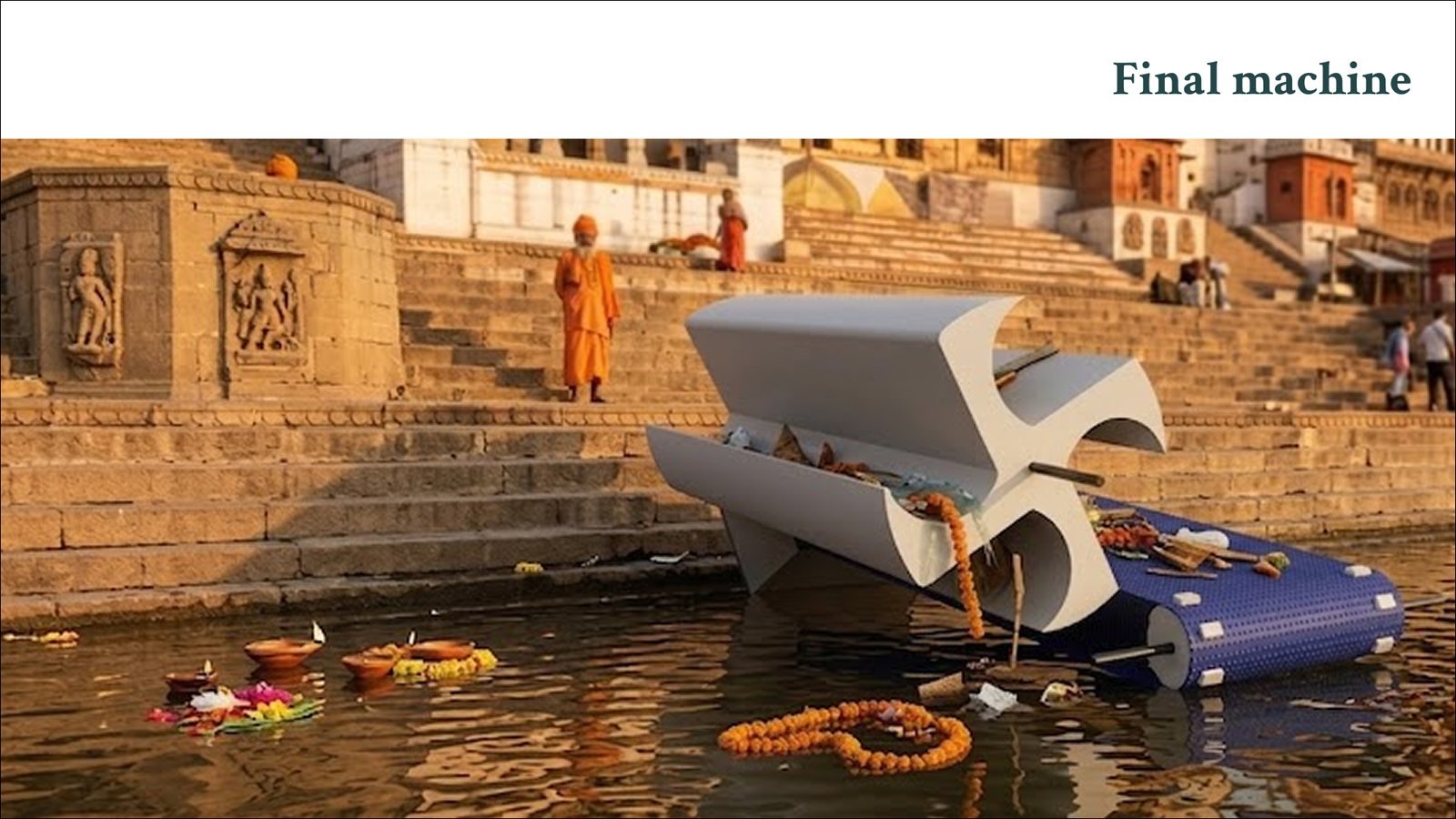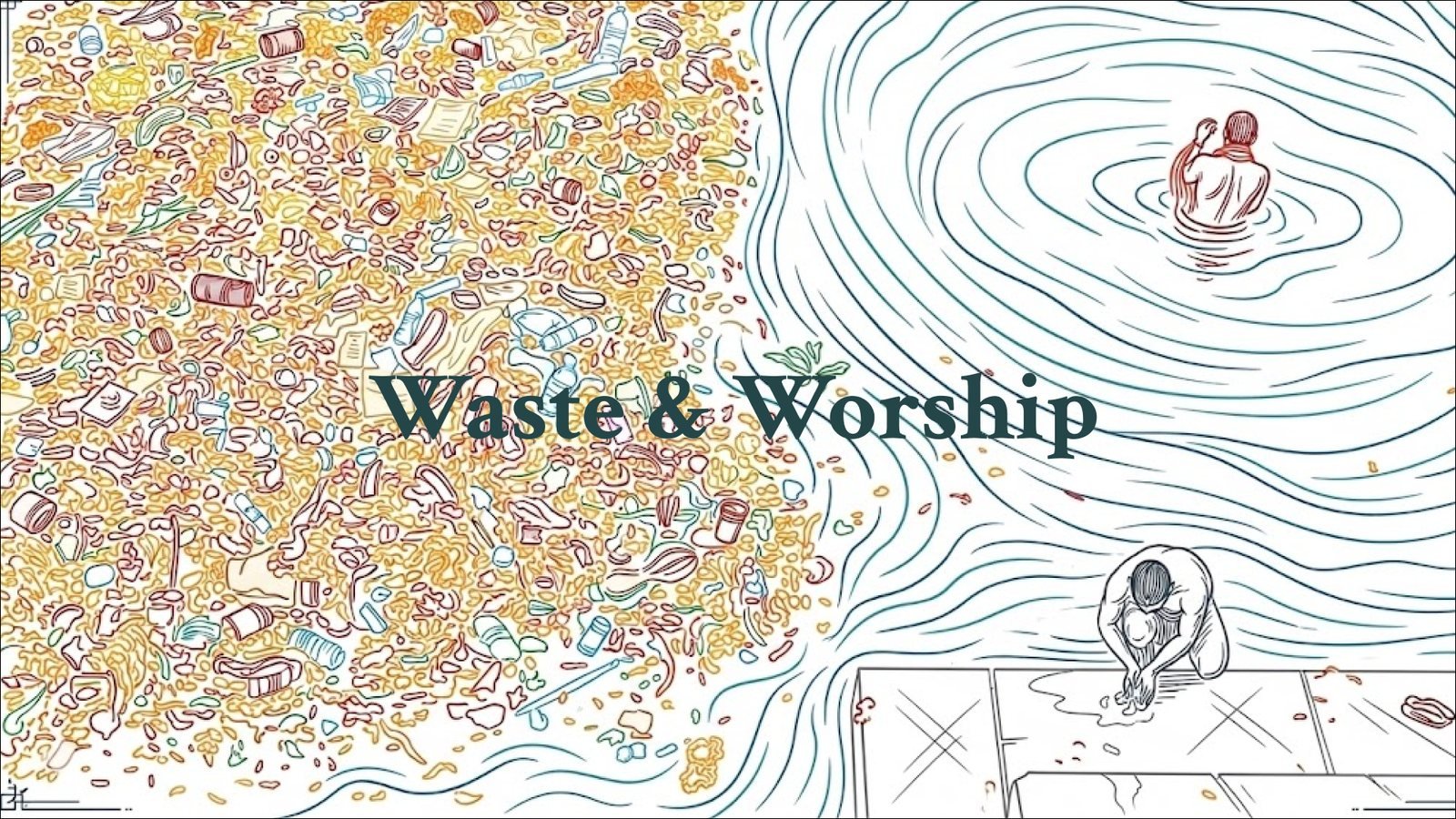
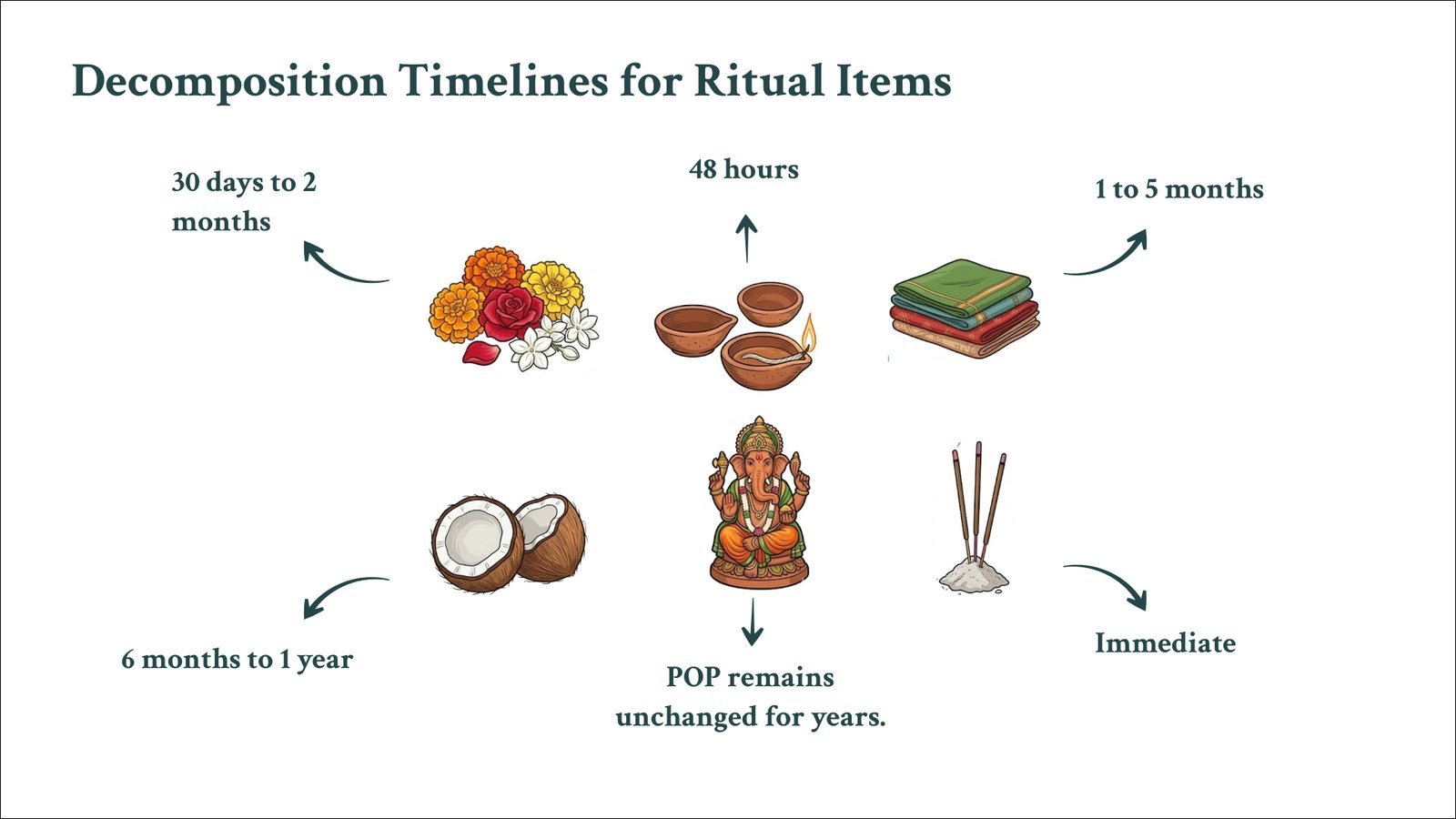
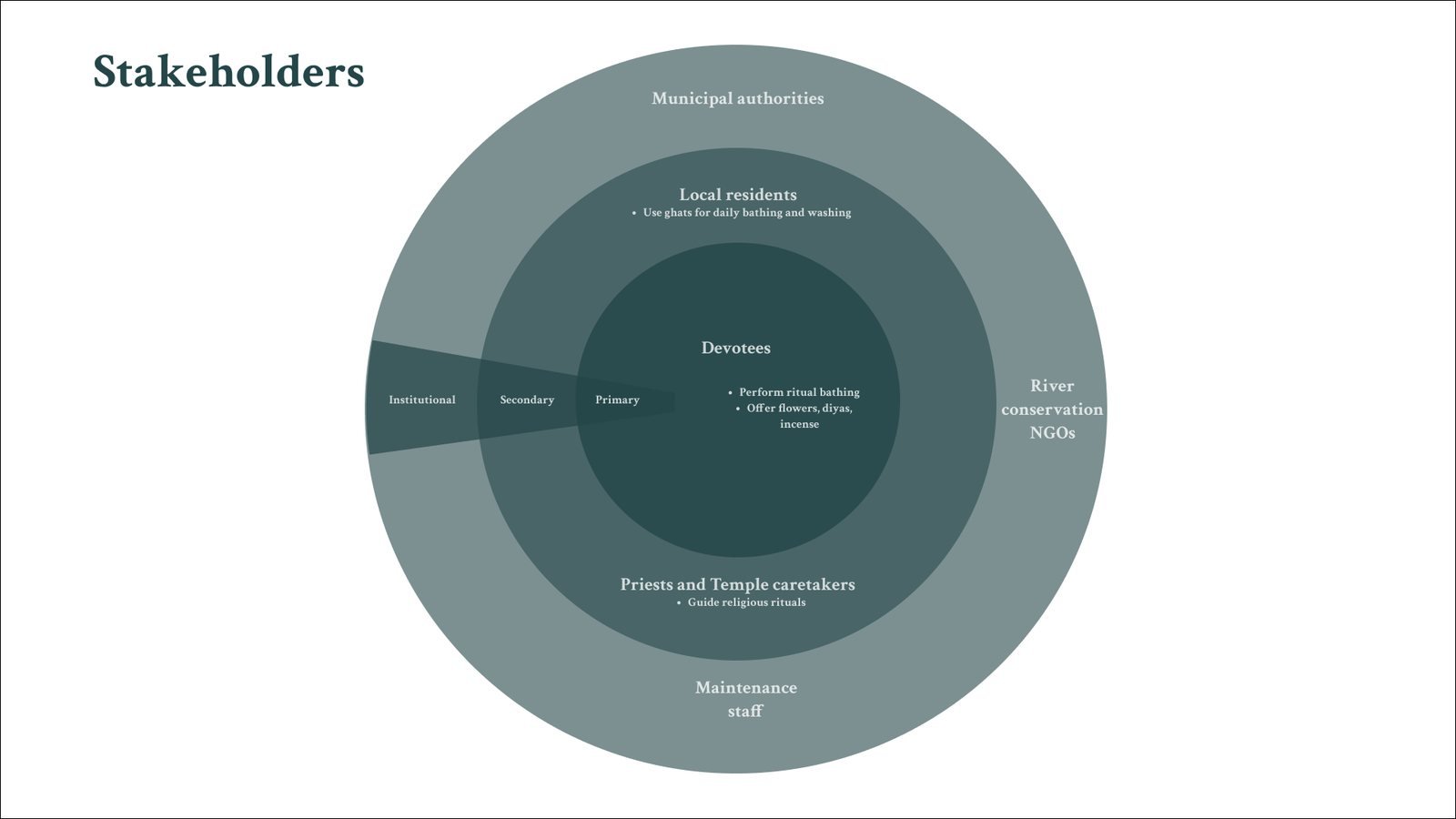
At high-activity interaction zones around natural water bodies, ritual offerings such as flowers, diyas, incense and cloth mix with plastic bags, food wrappers and industrial discharge, each with a wildly different decomposition timeline.
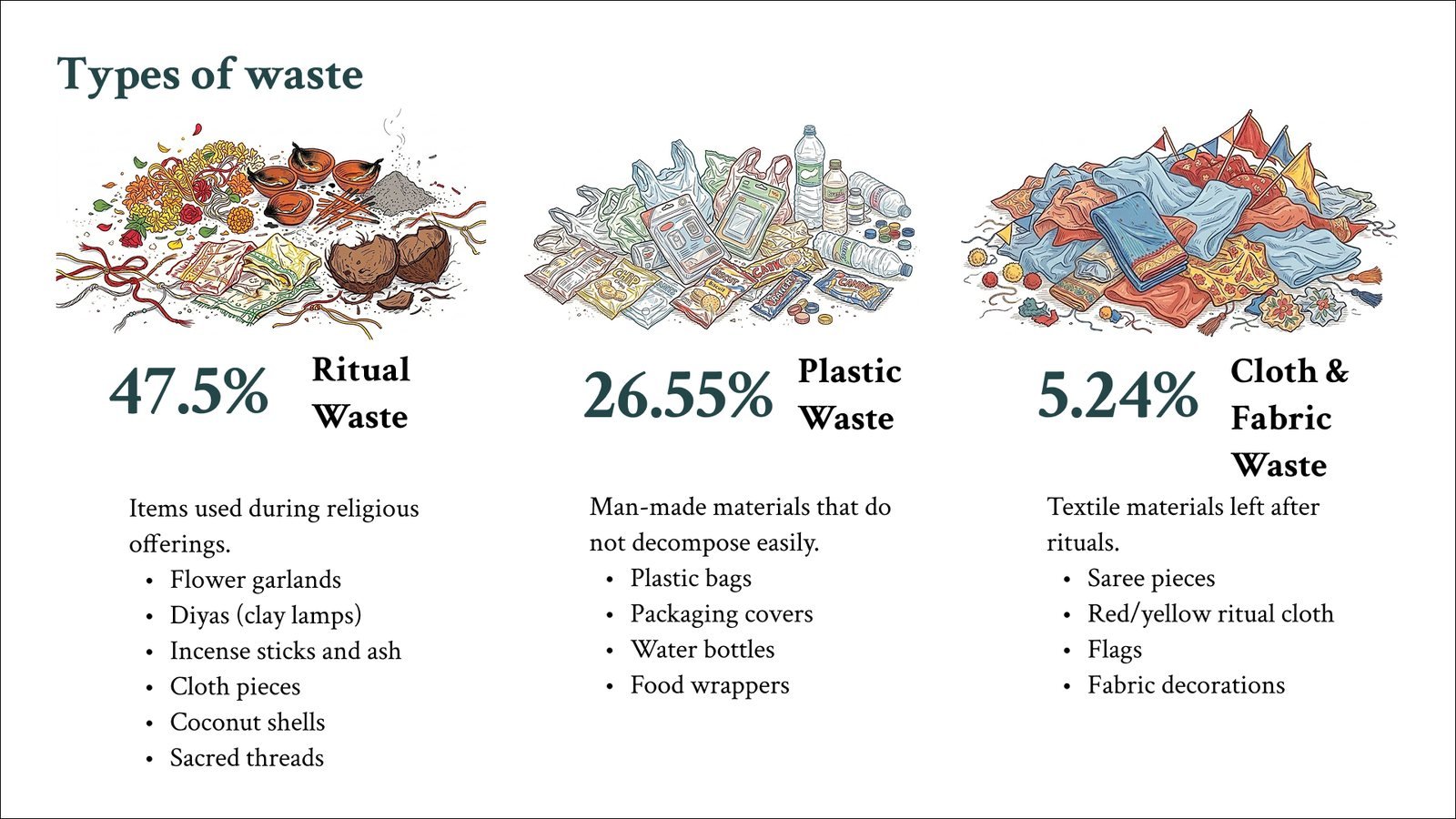
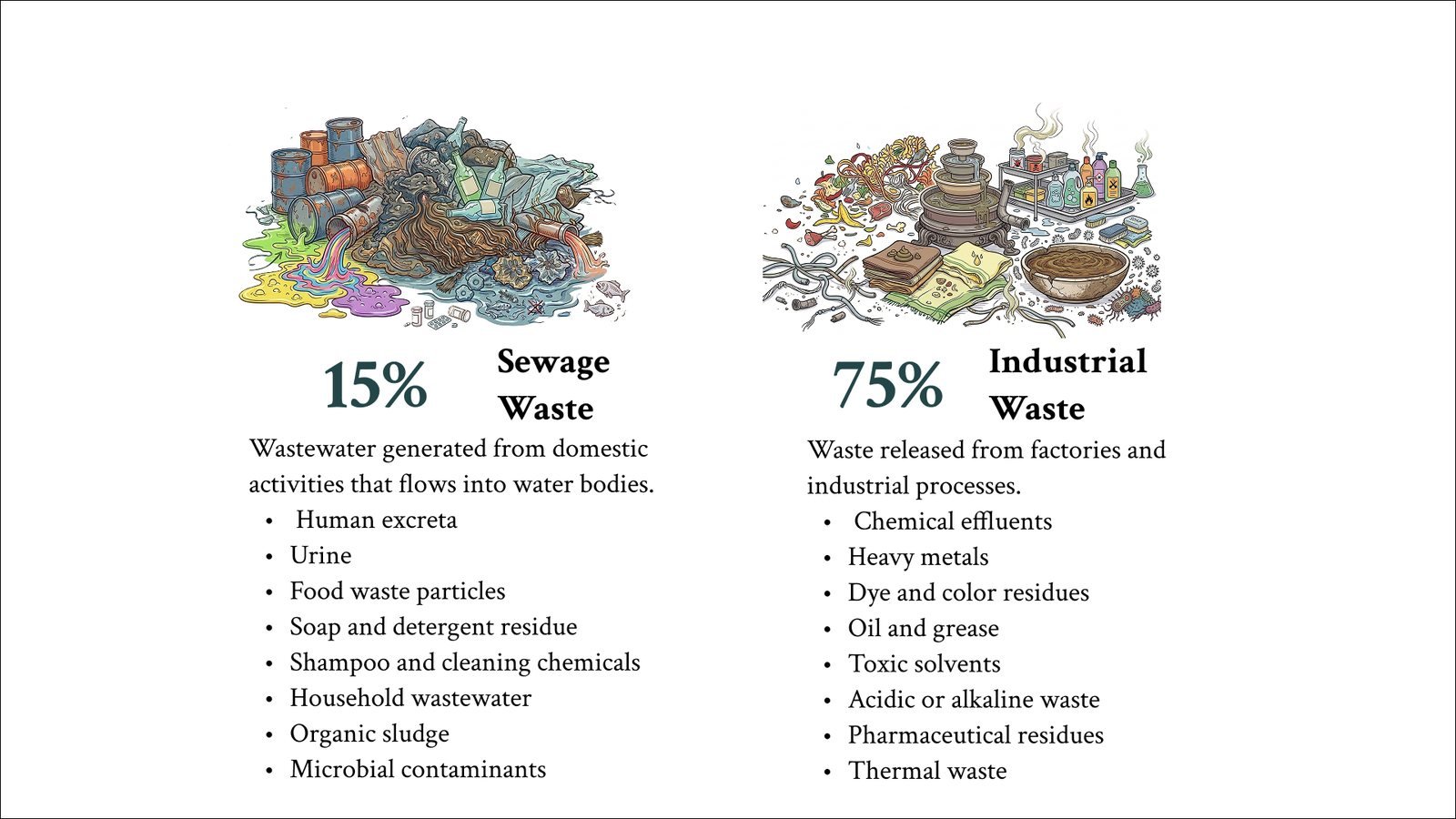
The project set out to explore design interventions that protect bathing and ritual zones from material accumulation, without restricting the cultural and religious practices that bring people to the water.
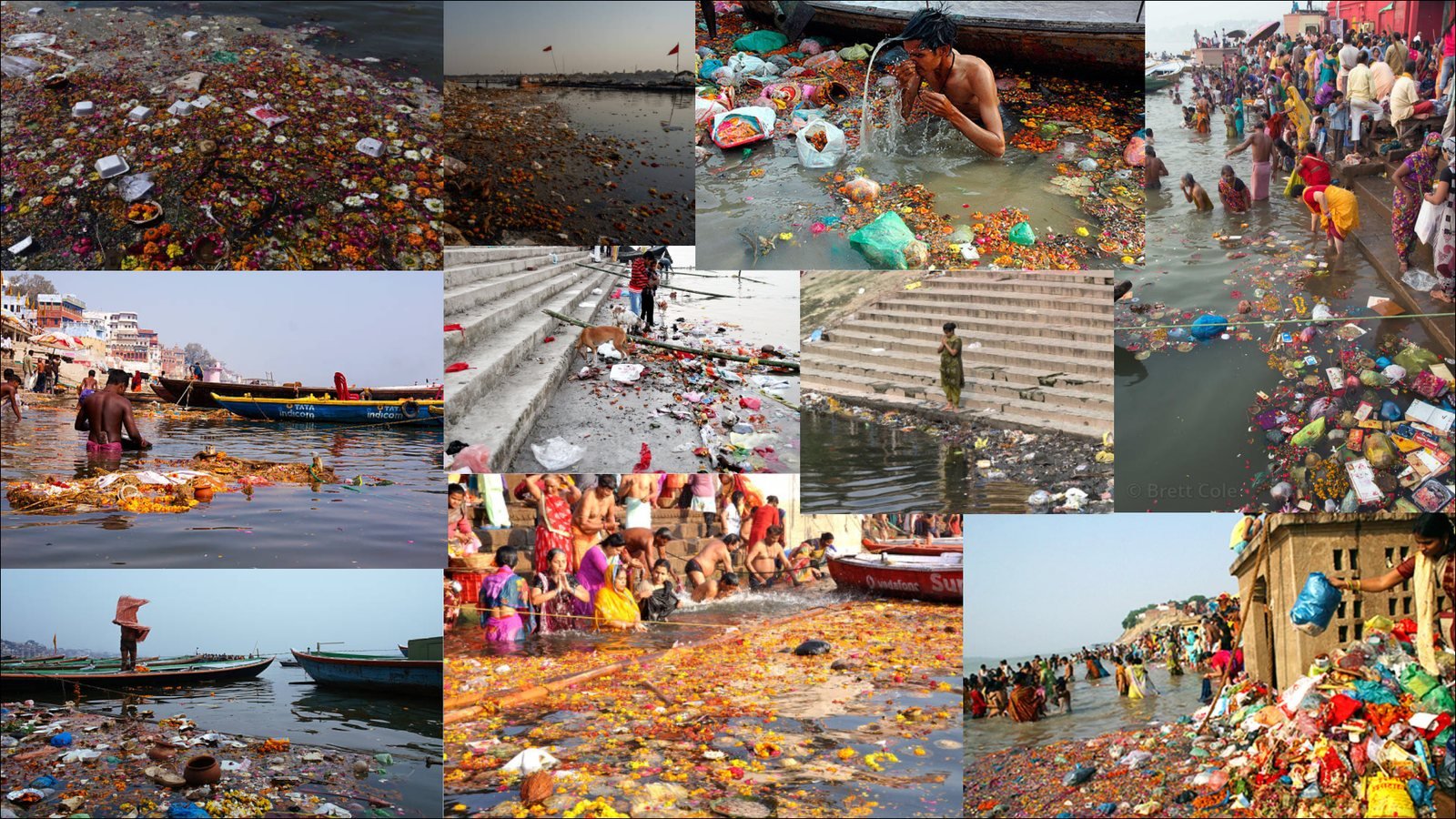
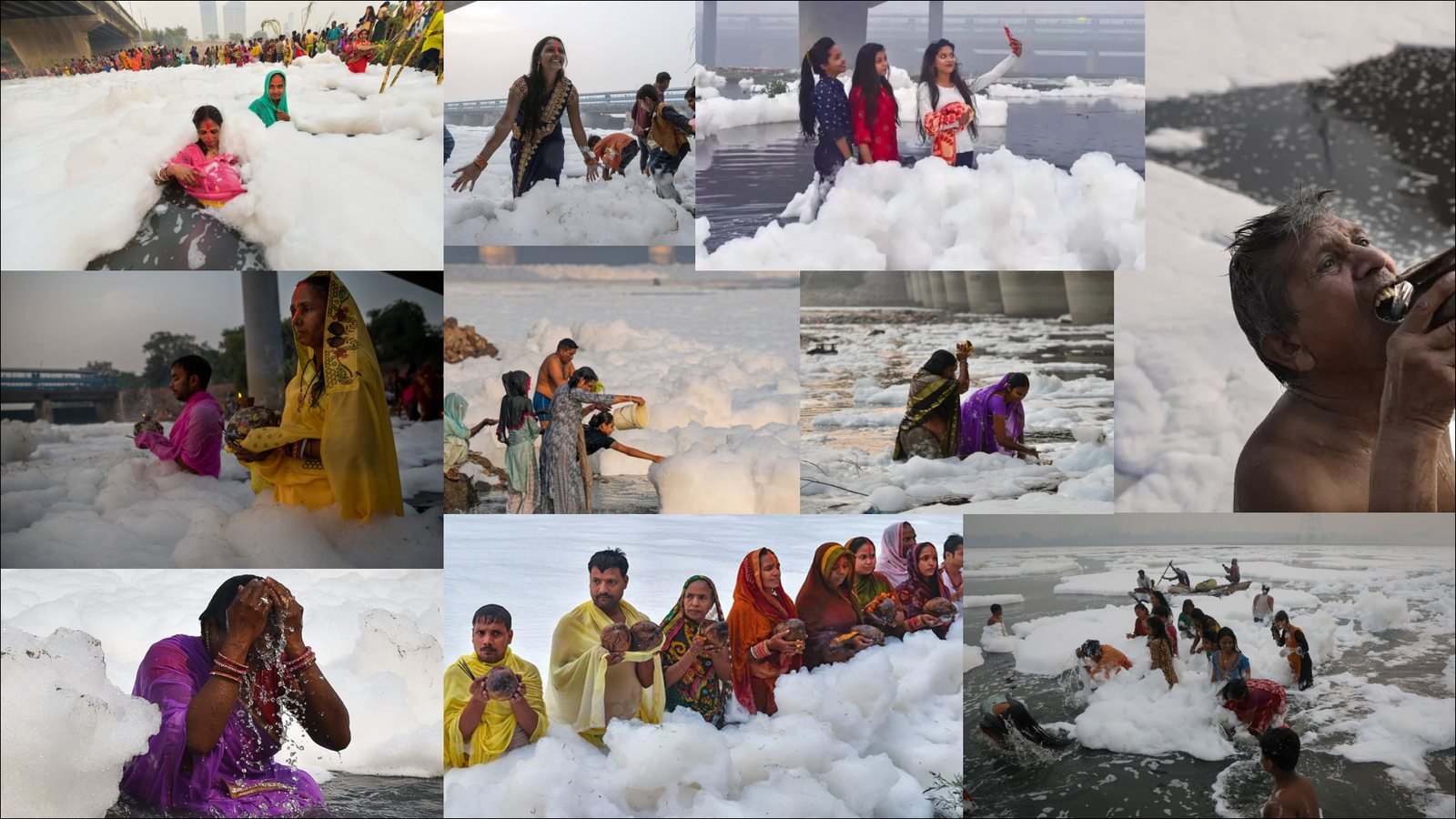
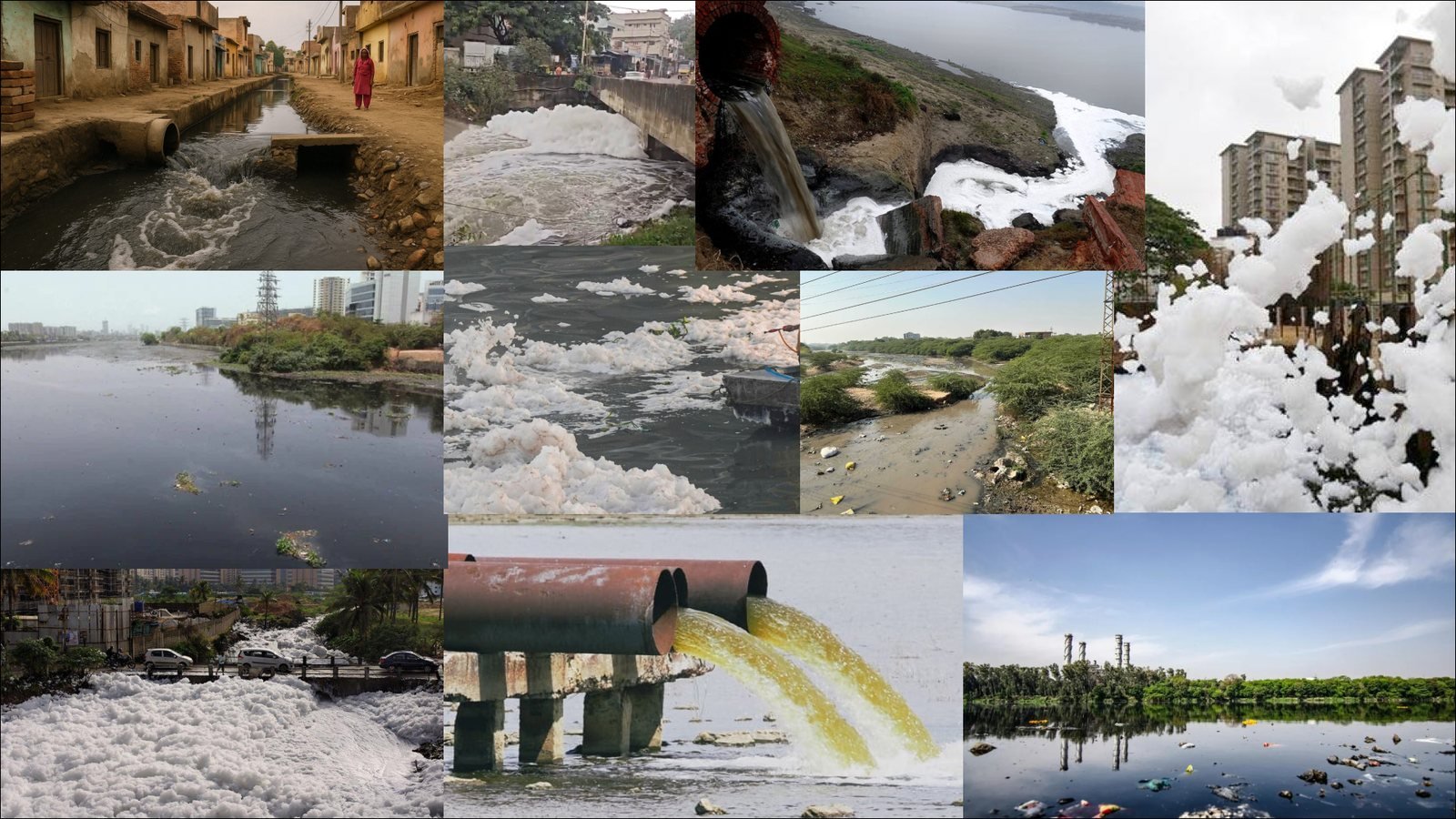
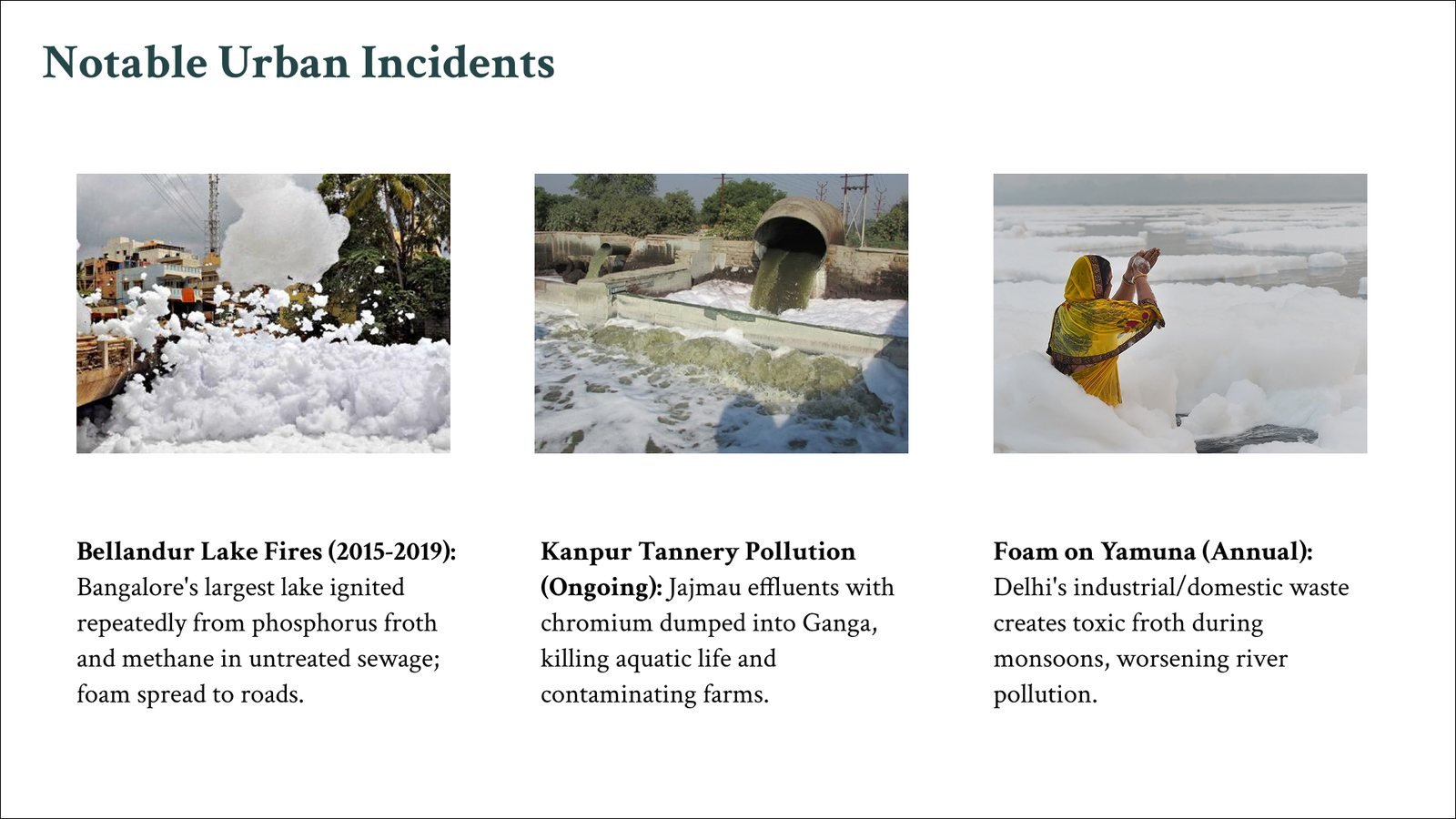
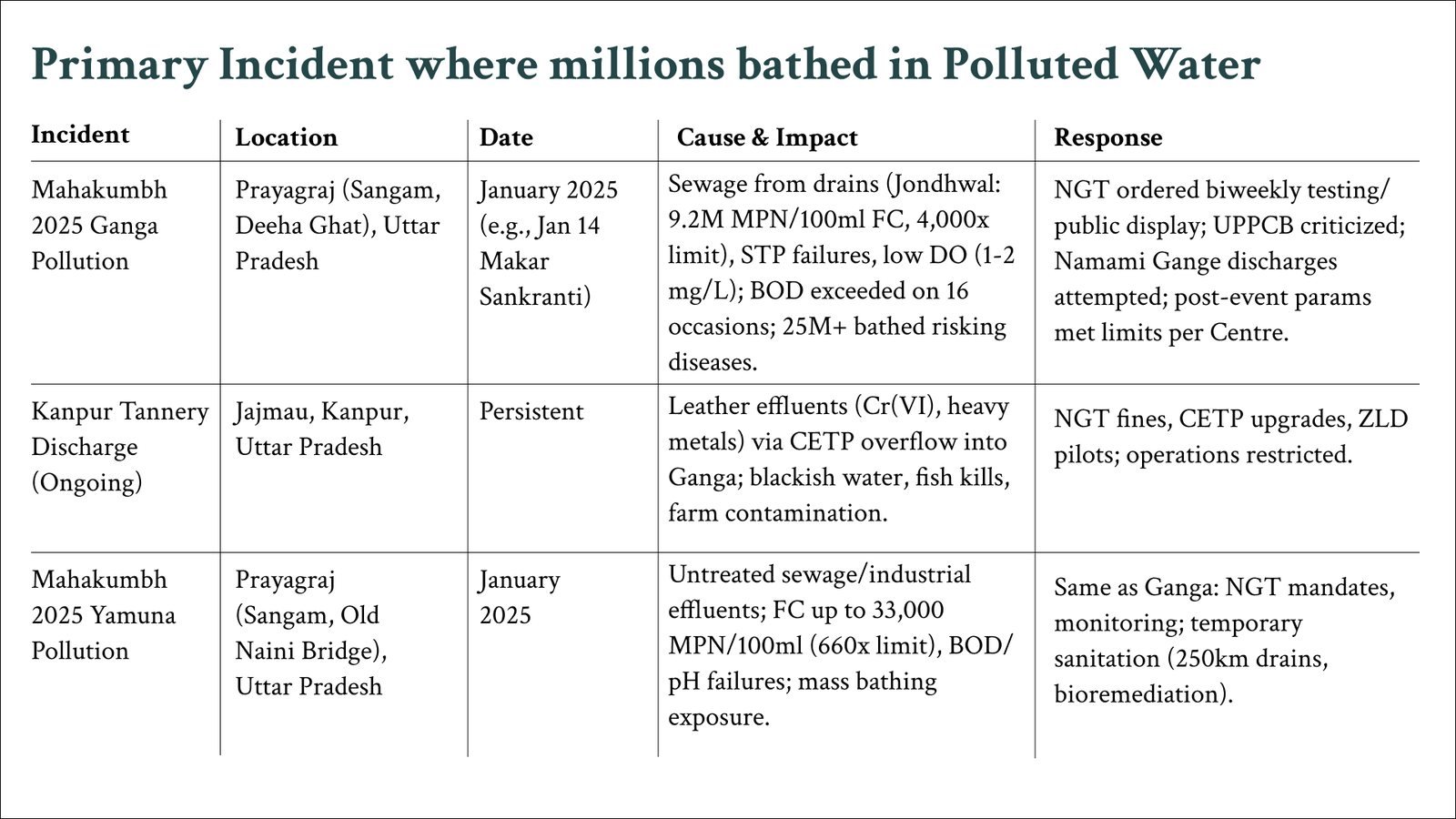
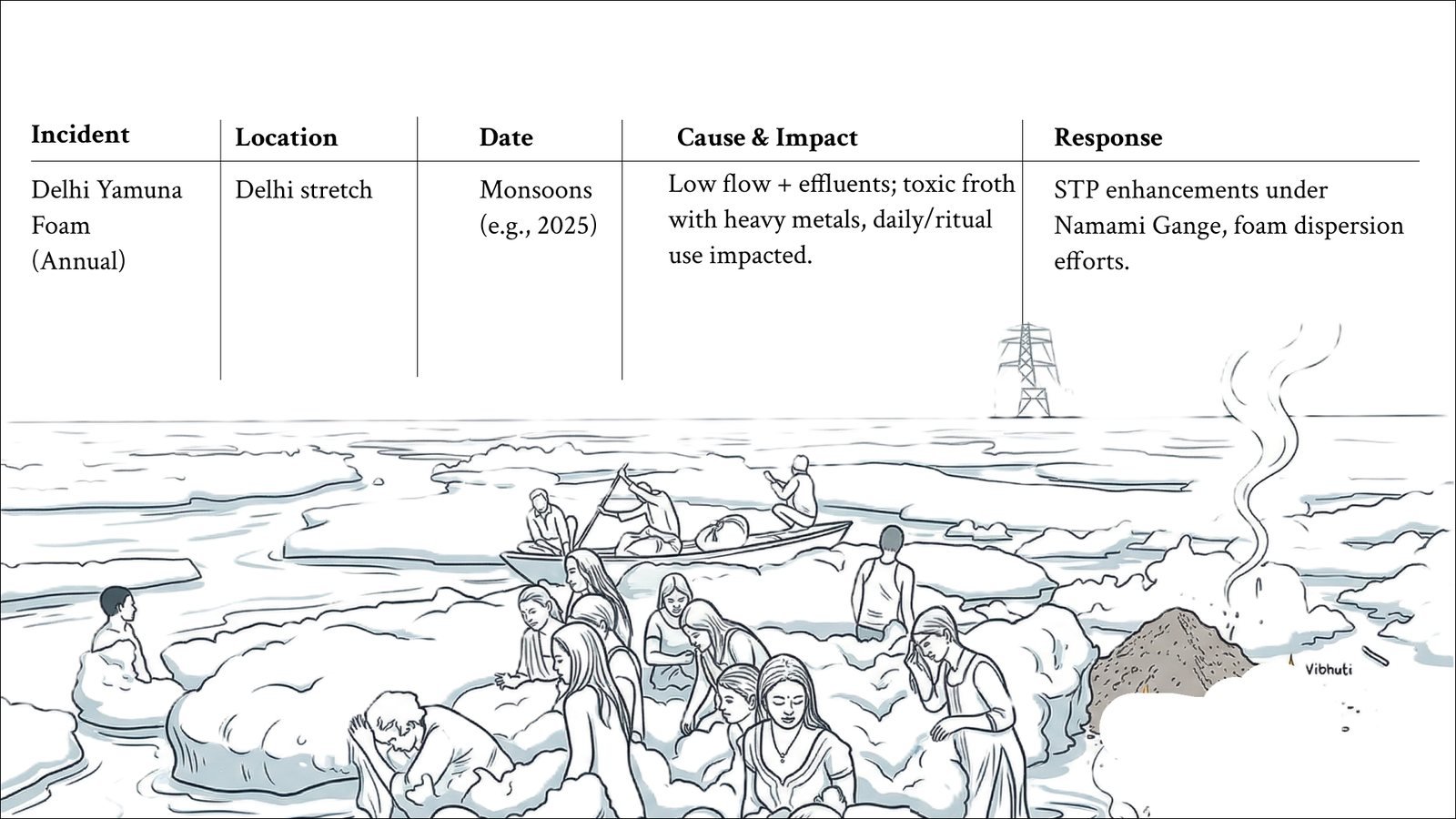
Secondary research into recent drinking-water crises and river-foam incidents across Indian cities made the stakes concrete: this isn't only an aesthetic problem, it's a public health one.
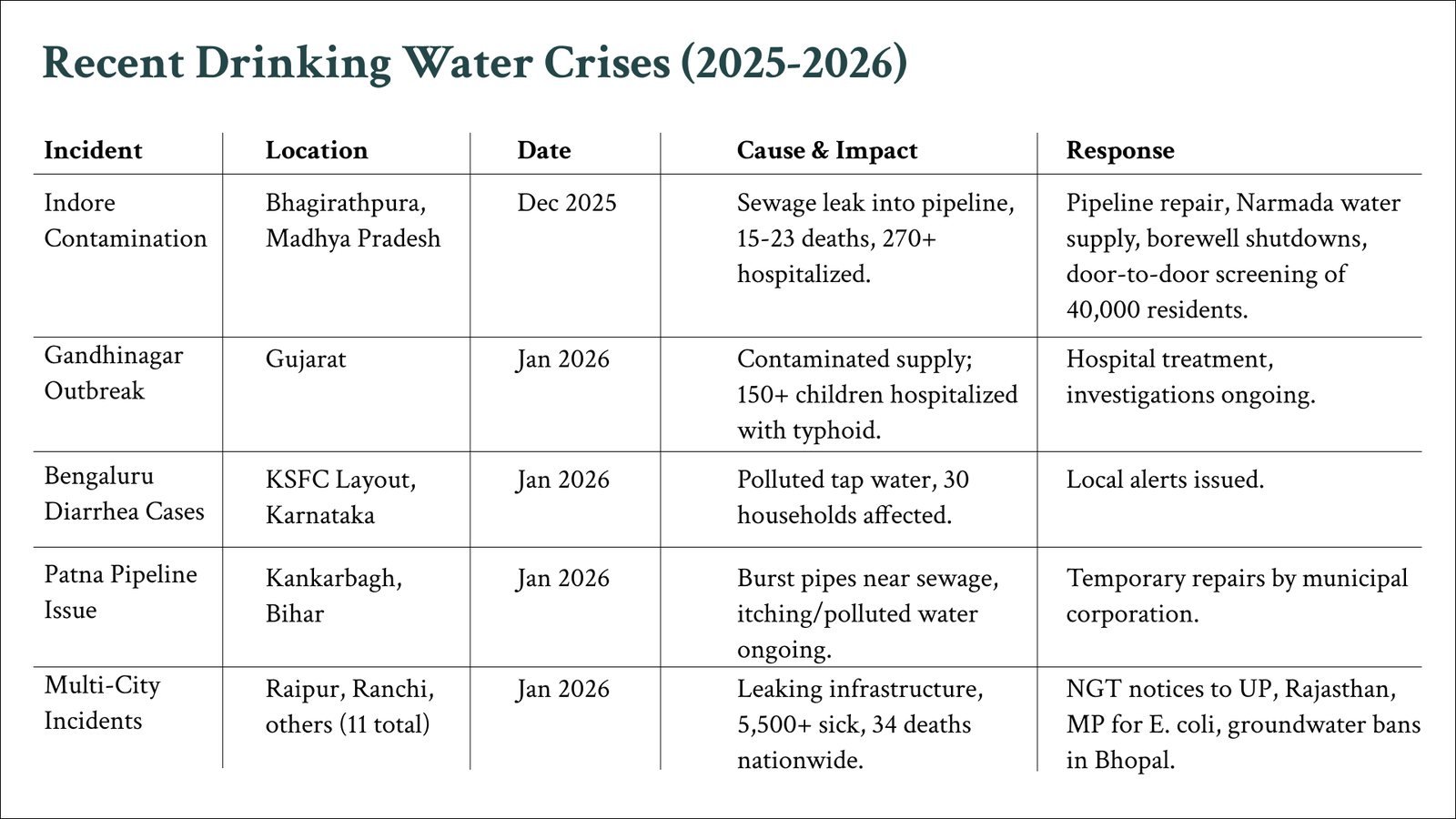
The brief carried one hard constraint throughout: the system had to work invisibly. Devotees still needed to touch the water directly, rituals couldn't be restricted, and nothing could look industrial or municipal.
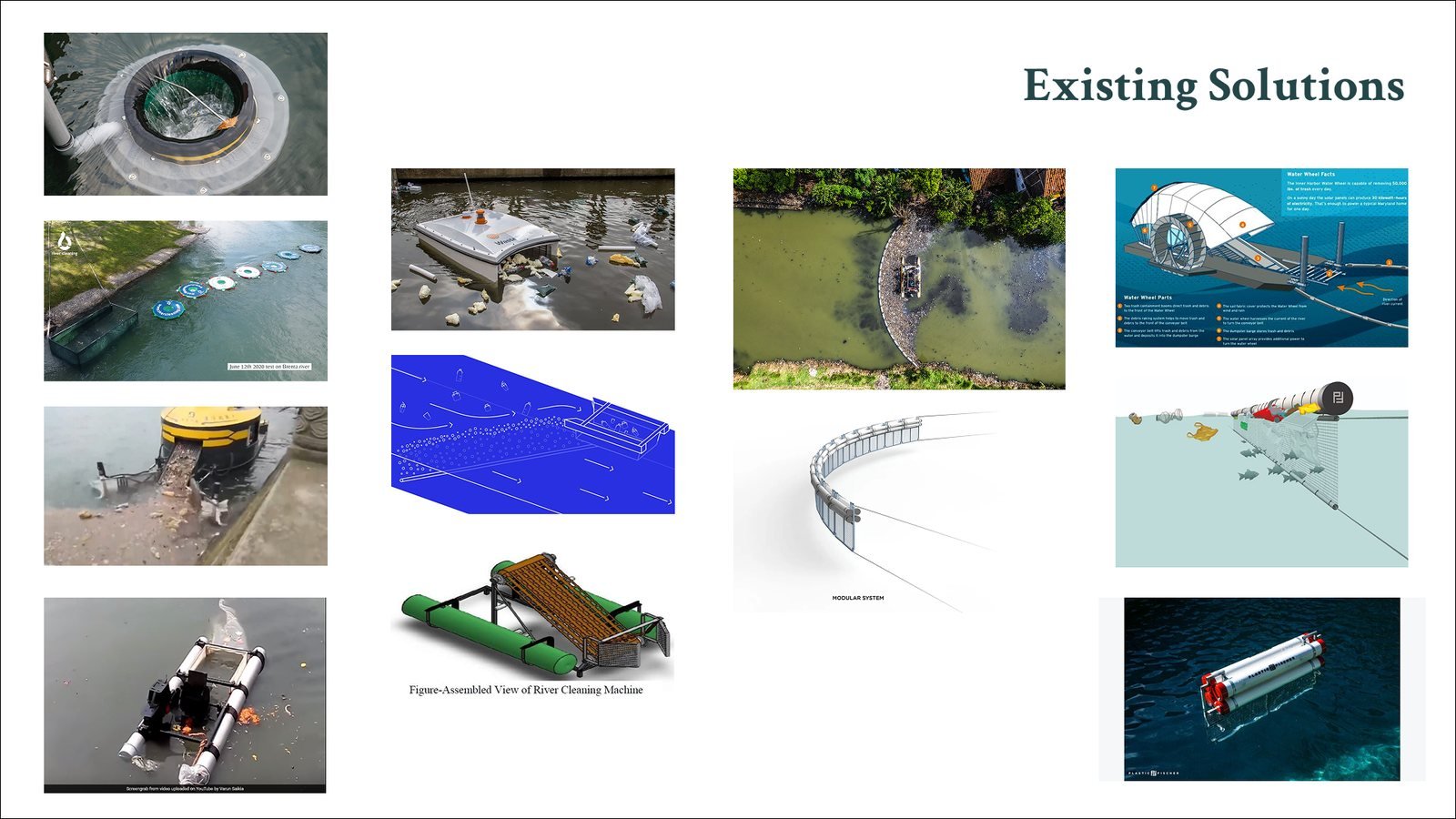
Existing river-cleaning technology was almost entirely industrial, motorised and built for open water, not for the intimate scale of a ghat or the presence of people bathing right beside it.
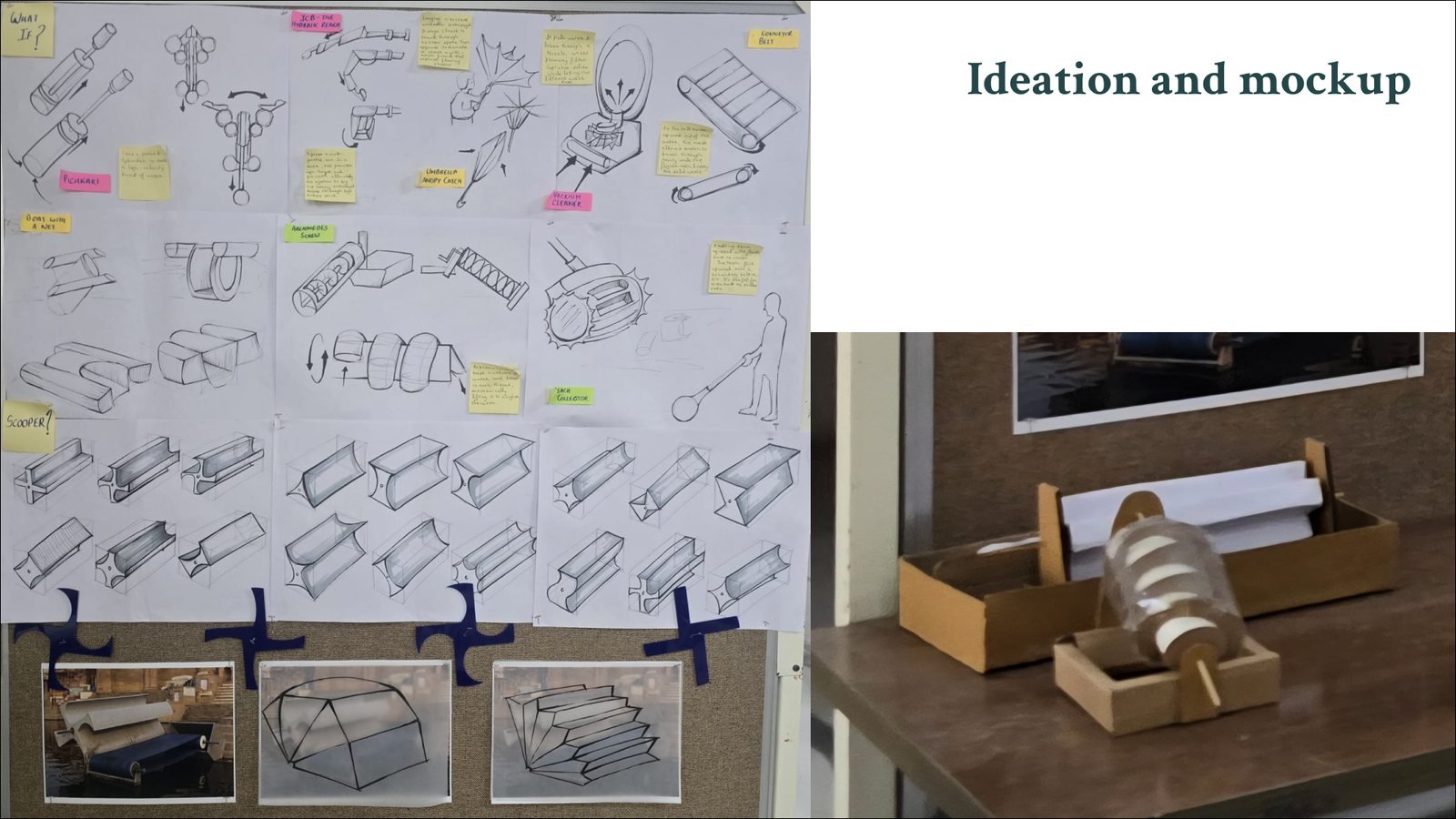
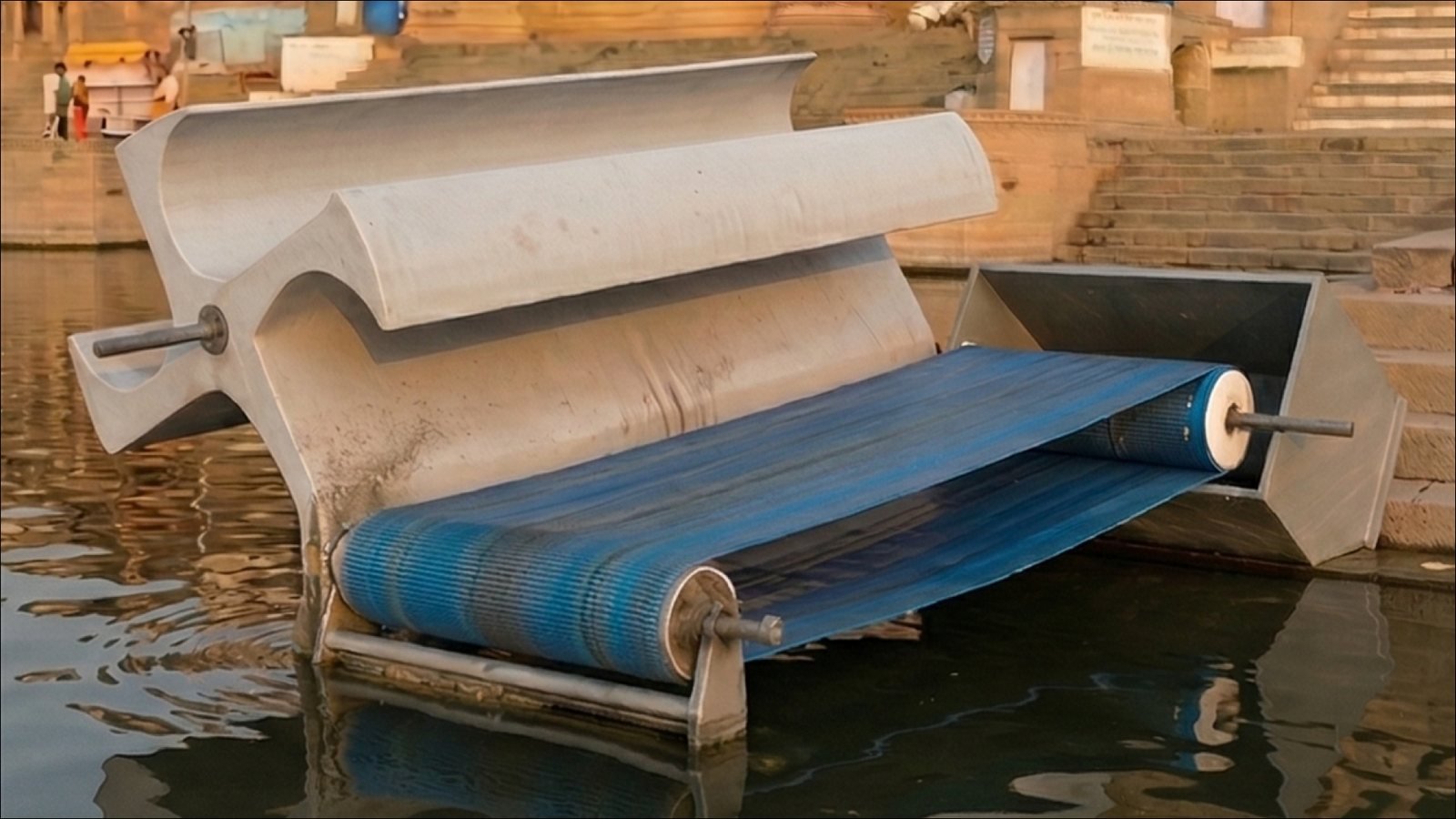
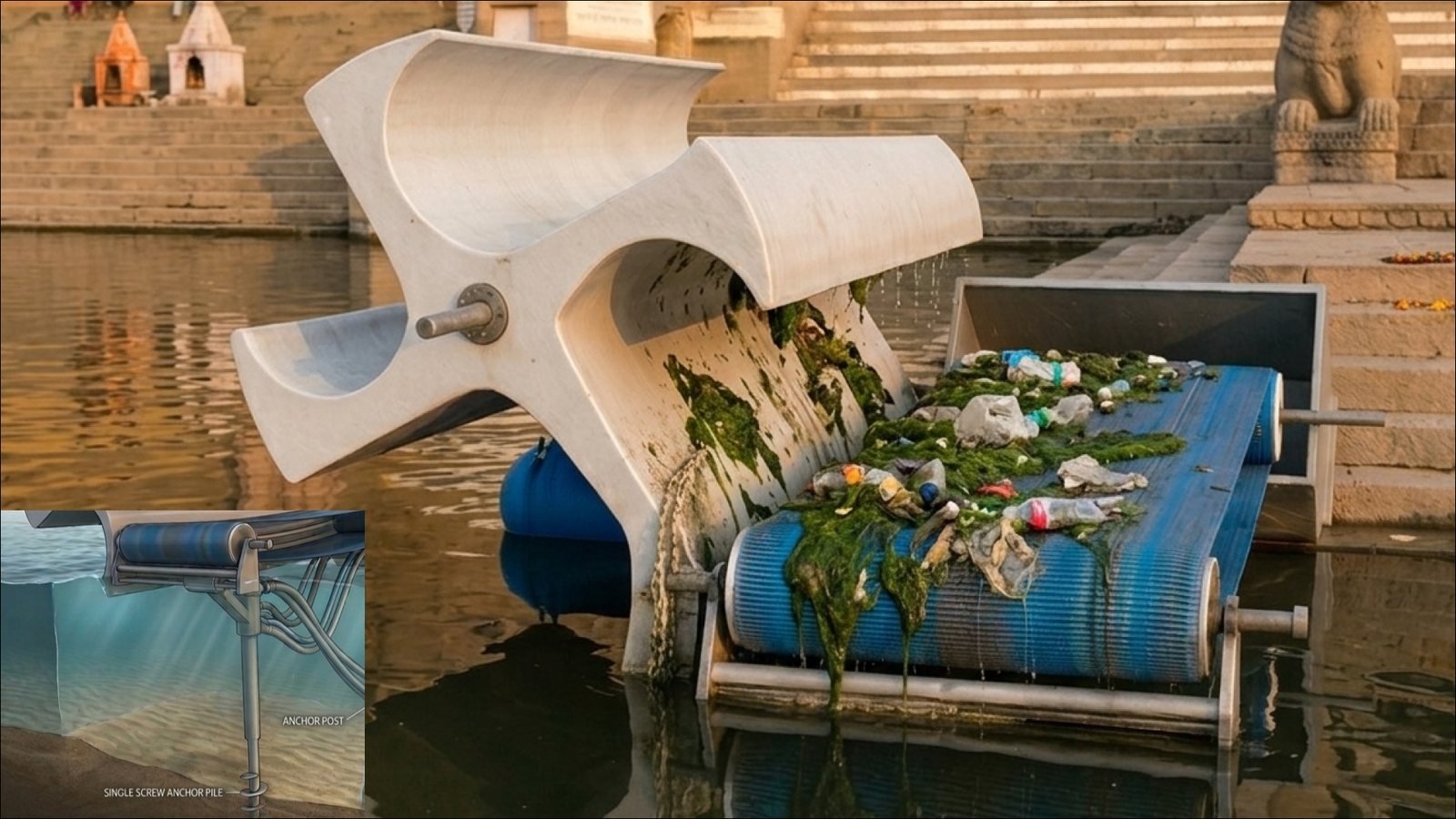
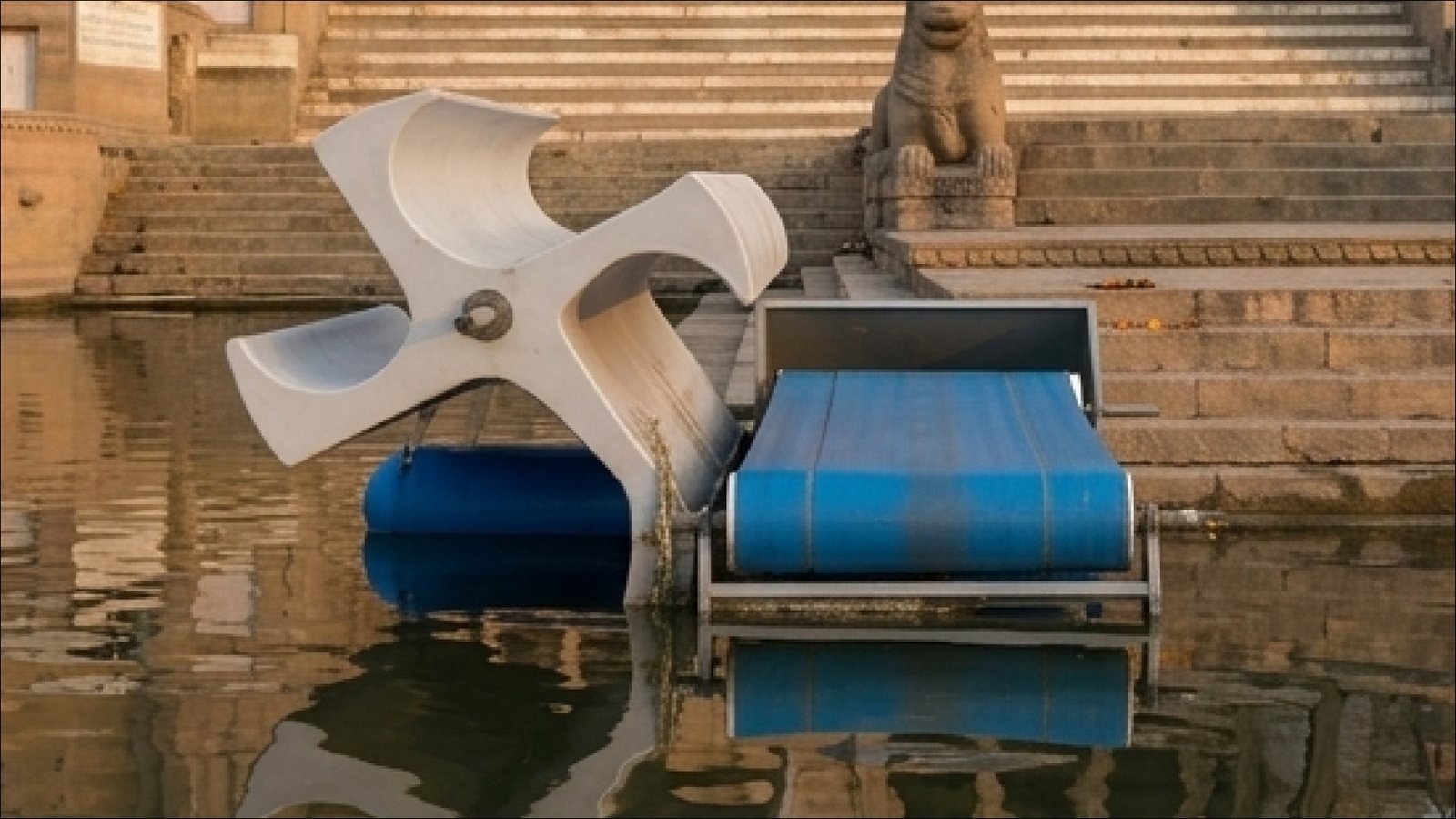
The final design uses a water-driven scoop wheel and a submerged conveyor belt, anchored quietly at the edge of a ghat, so the current itself does the work of lifting floating material away from the bathing area.