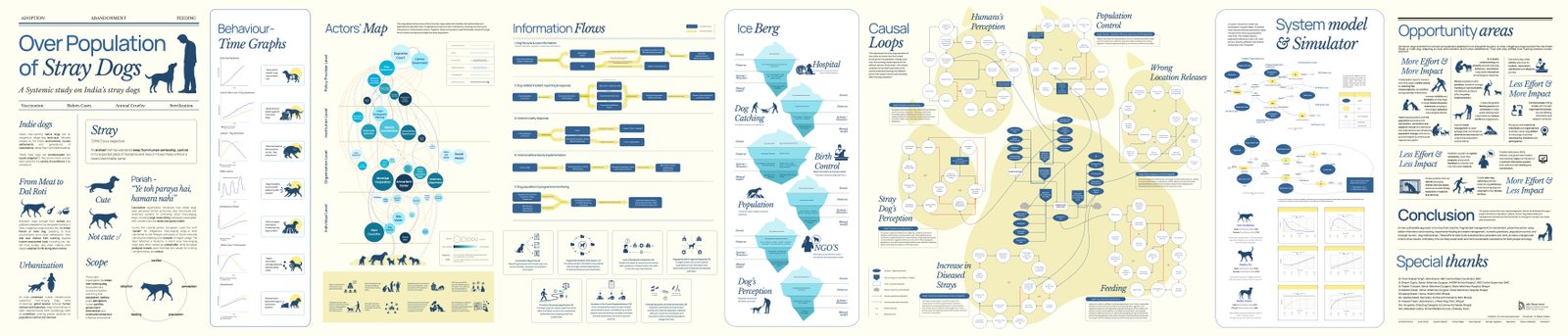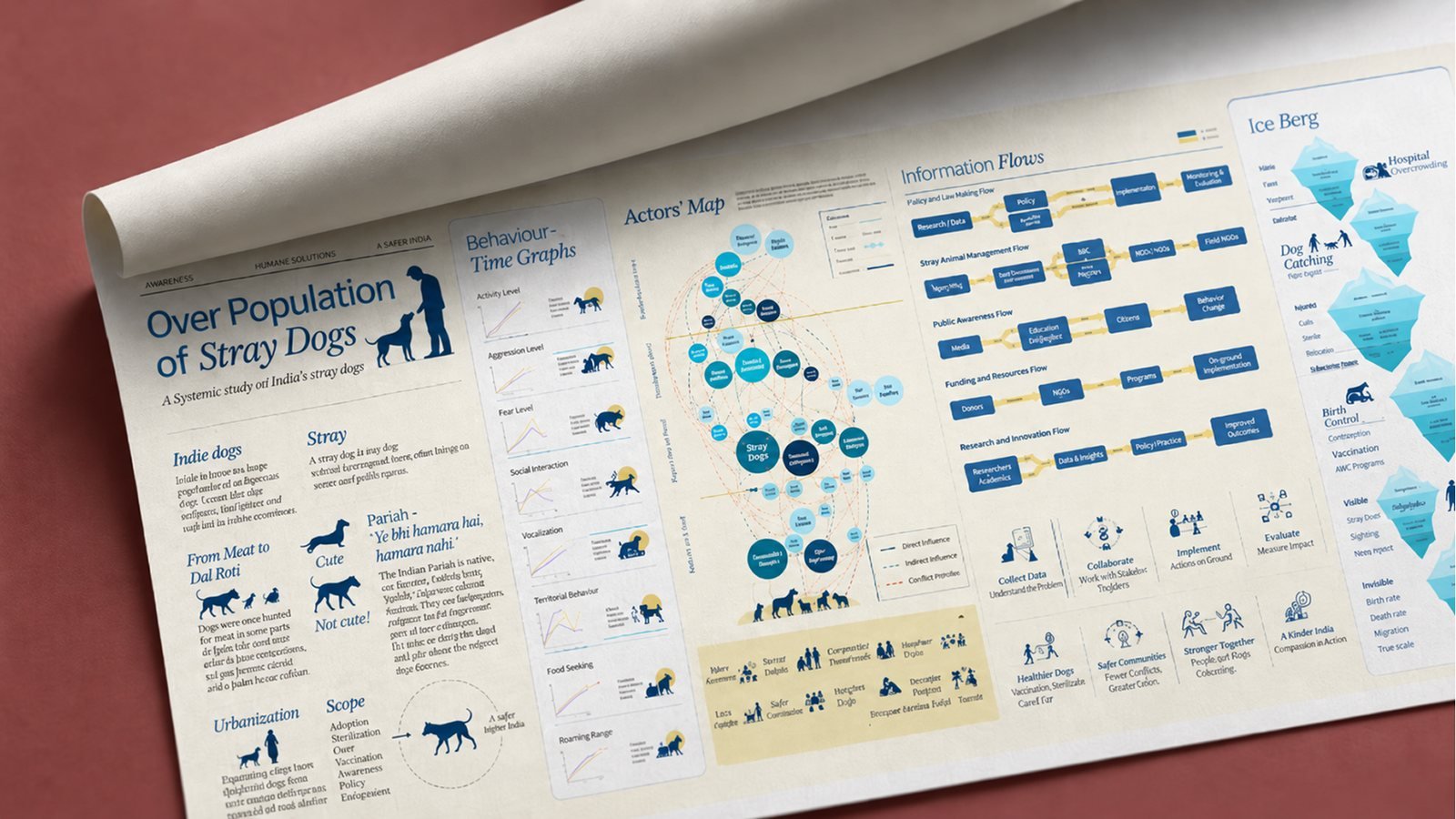
Guided by Mr. Arun Koormamtharayil, this study maps the free-roaming dog ecosystem as a connected system, identifying the relationships, feedback loops, gaps and opportunities that shape how humans and dogs share urban space.
Download full gigamap (PDF)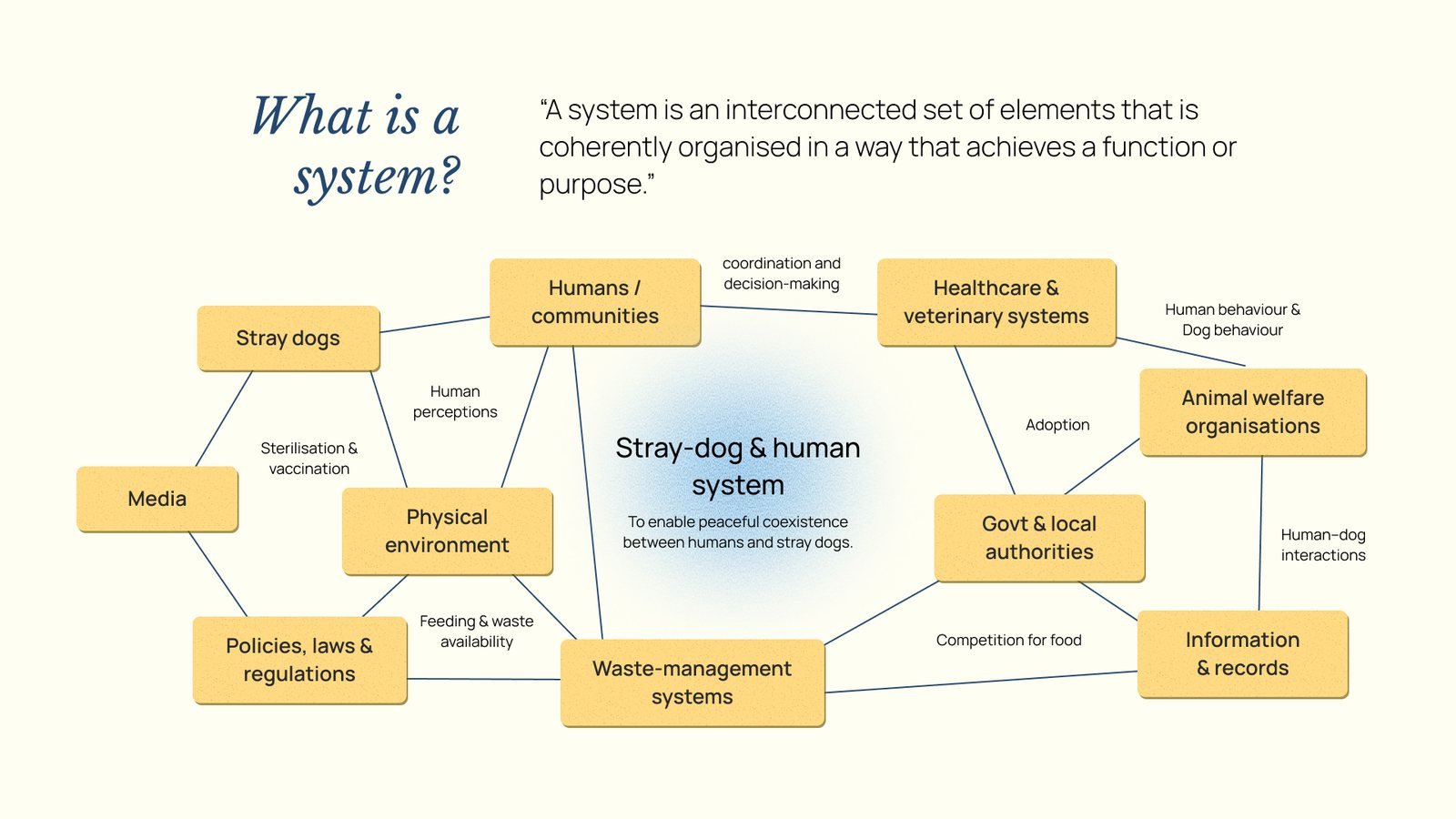
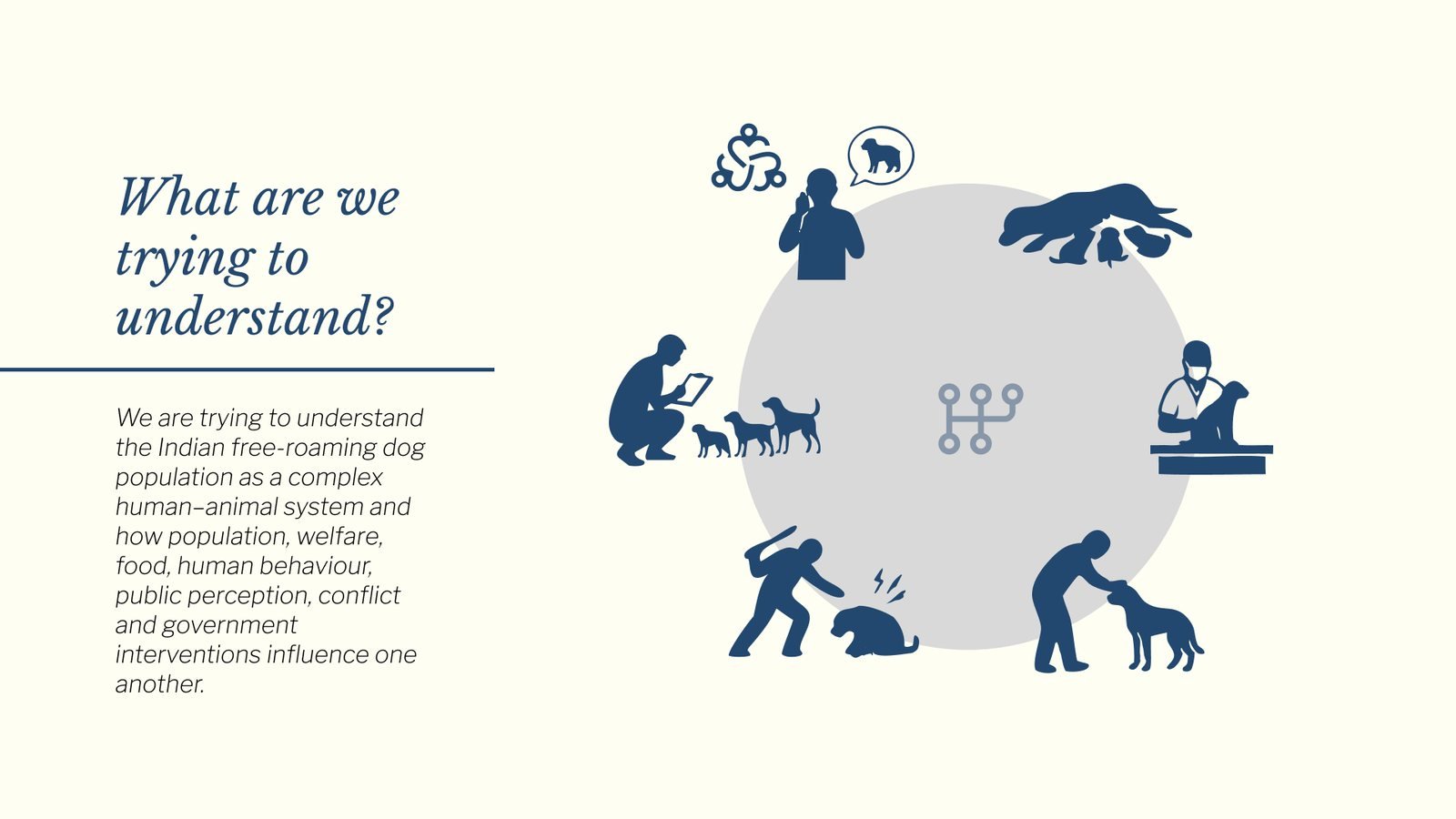
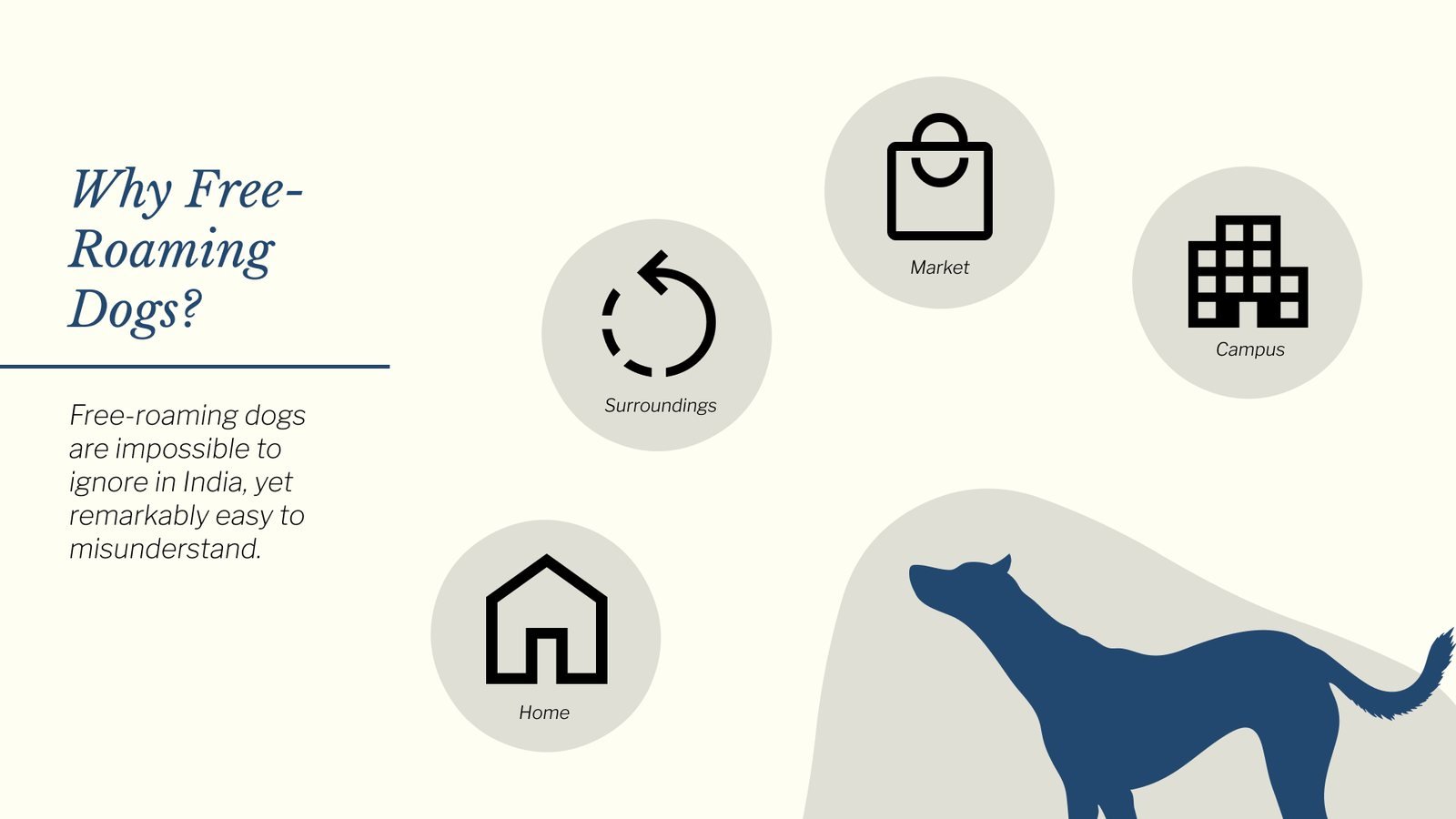
Free-roaming dogs are impossible to ignore in India, yet remarkably easy to misunderstand. Some people feed them, others fear them, and both responses are shaped by a much larger system of policy, infrastructure and perception.
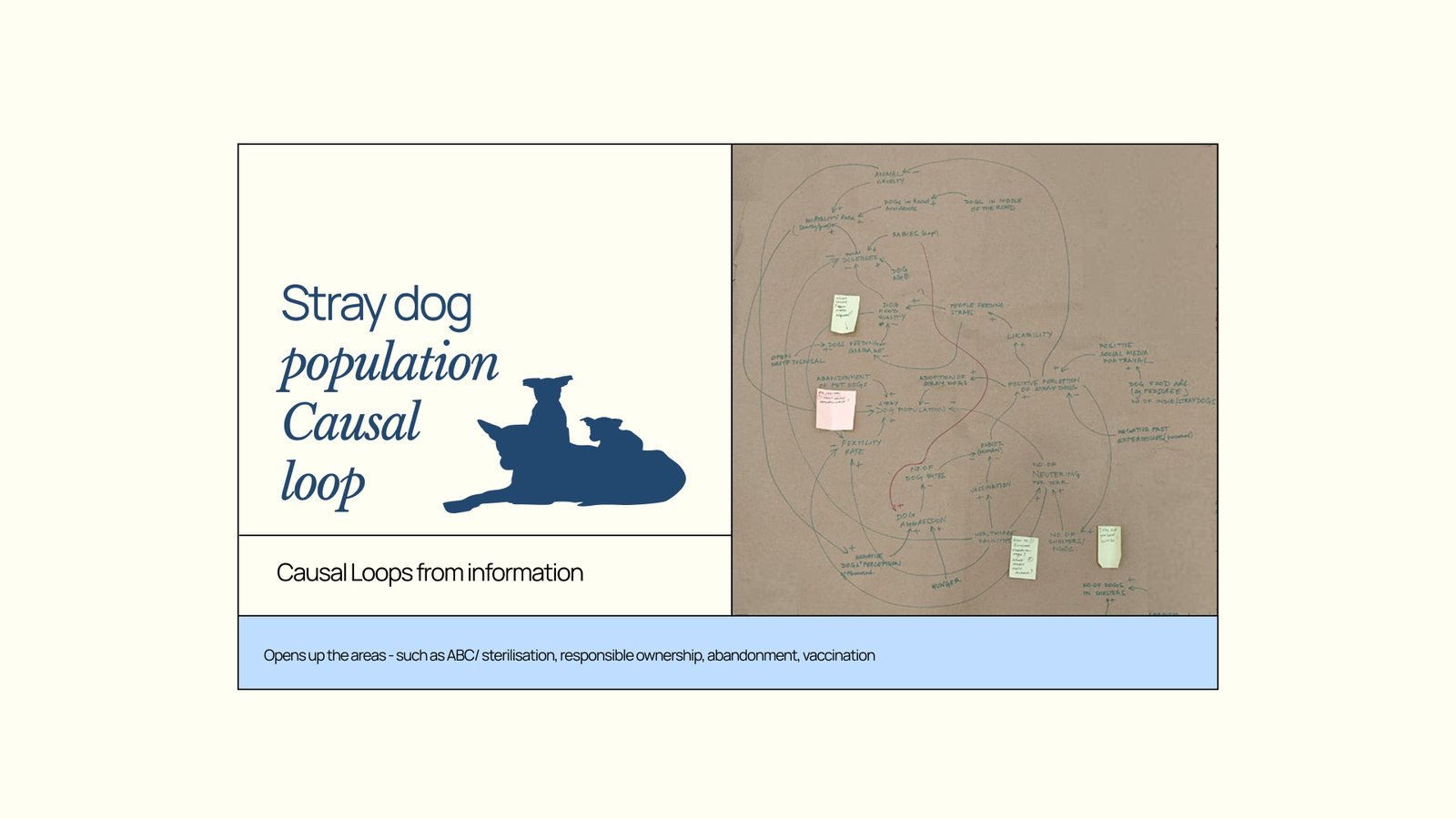
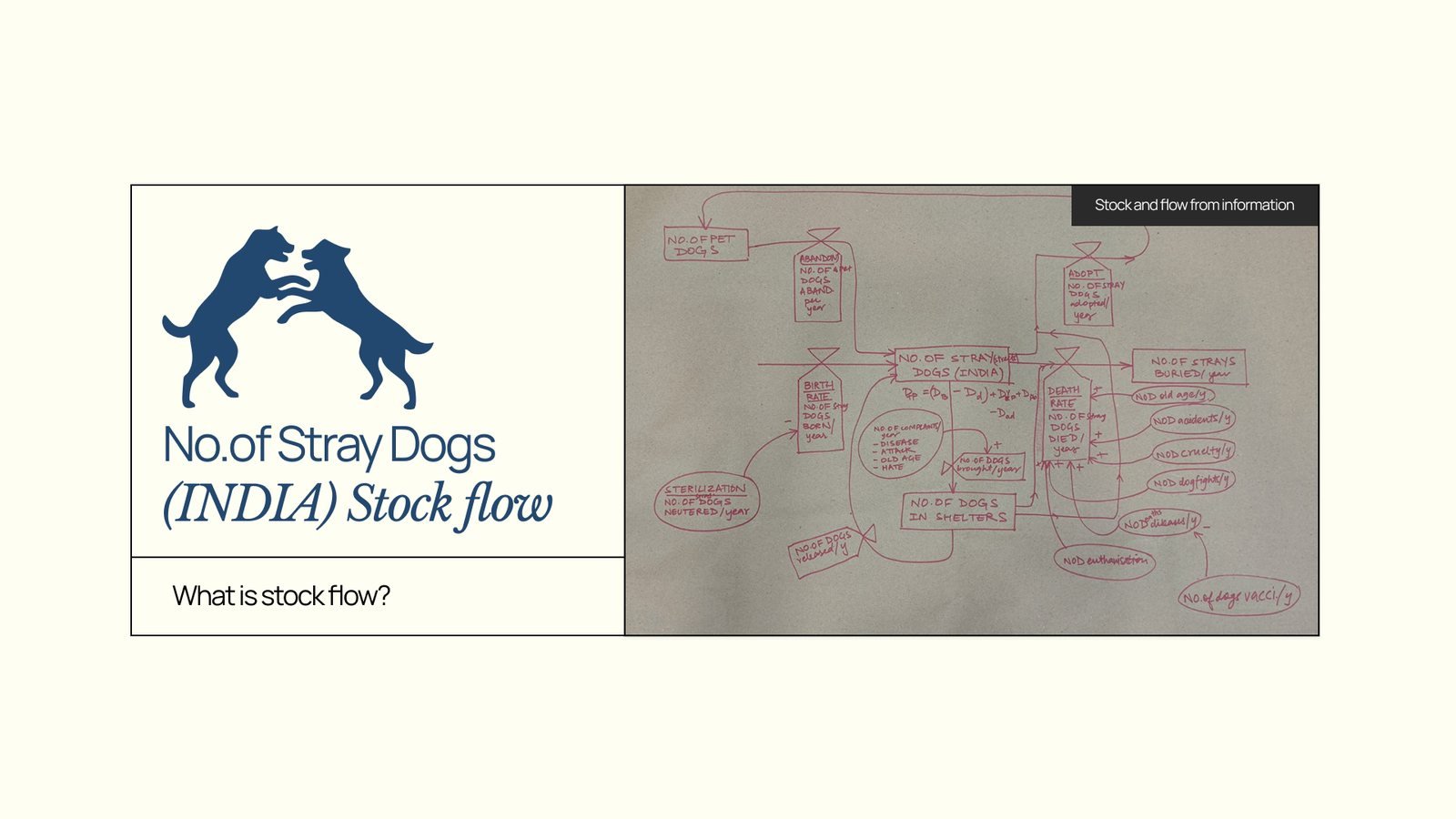
Causal loop diagrams and stock-and-flow models were built by hand to trace how sterilisation rates, abandonment, feeding behaviour and shelter capacity all pull on the same population over time.
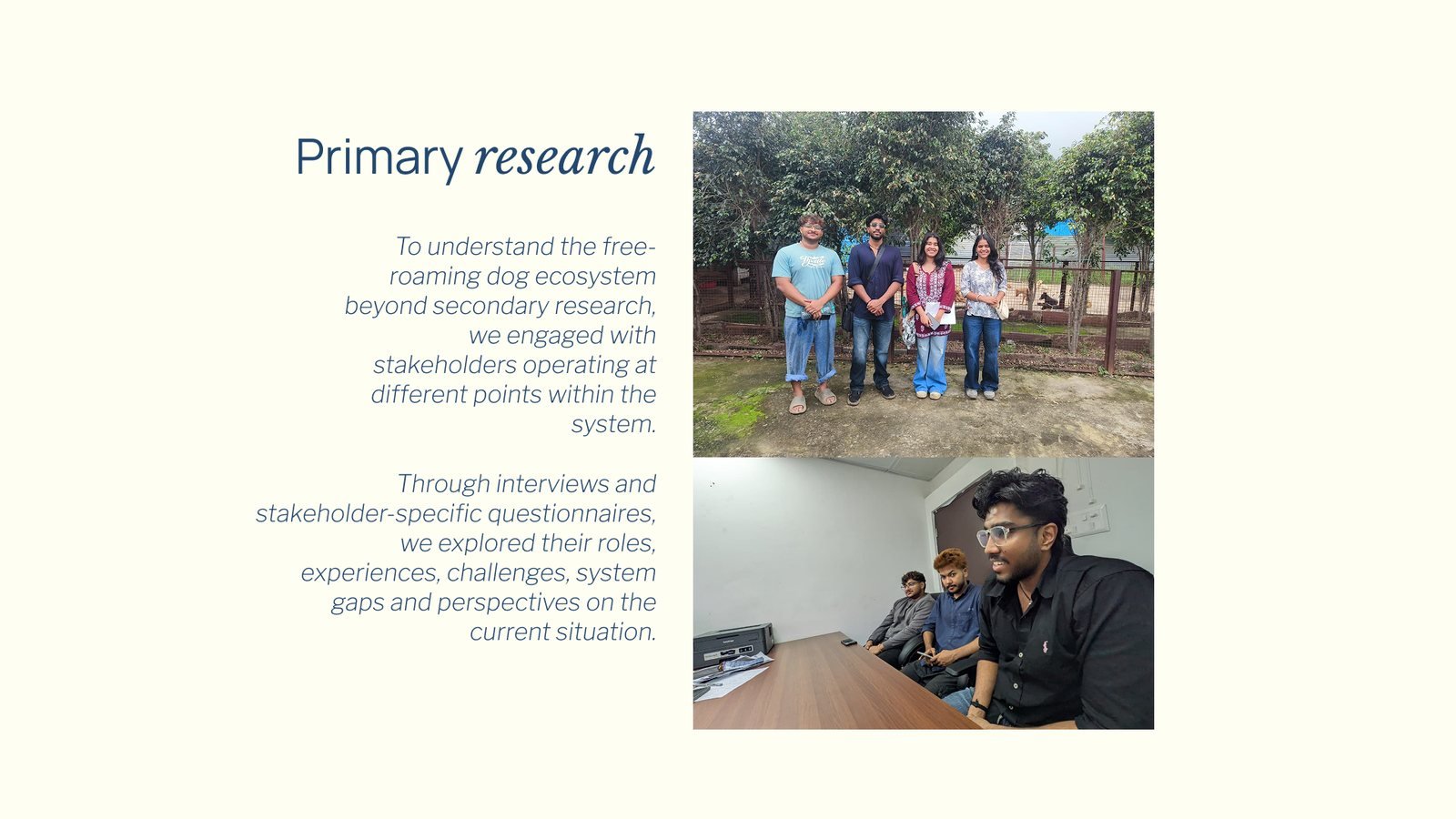
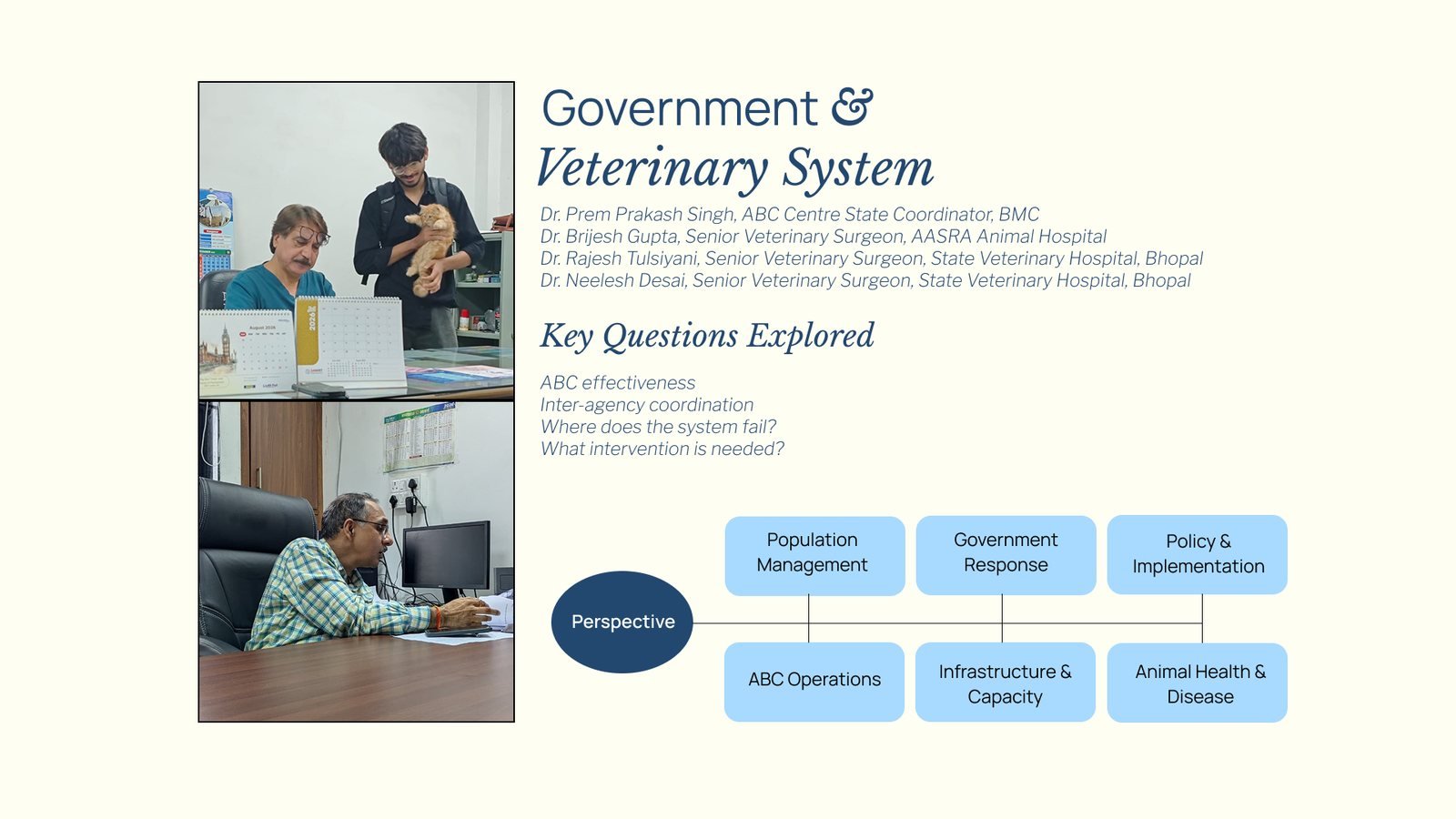
Interviews spanned the full width of the system: NGOs and animal welfare activists, ABC centre coordinators, senior veterinary surgeons and municipal officials, each seeing a different slice of the same problem.
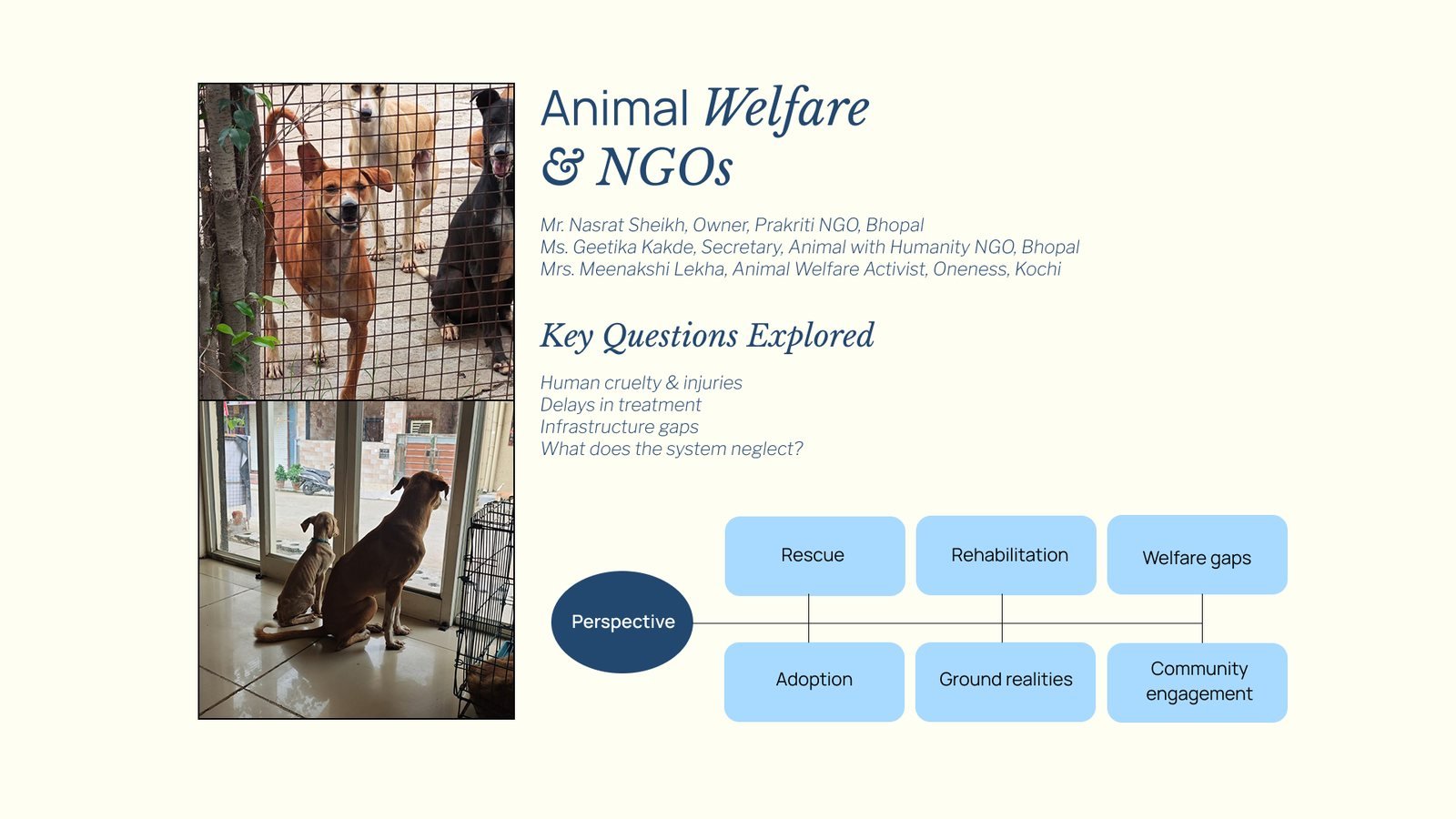
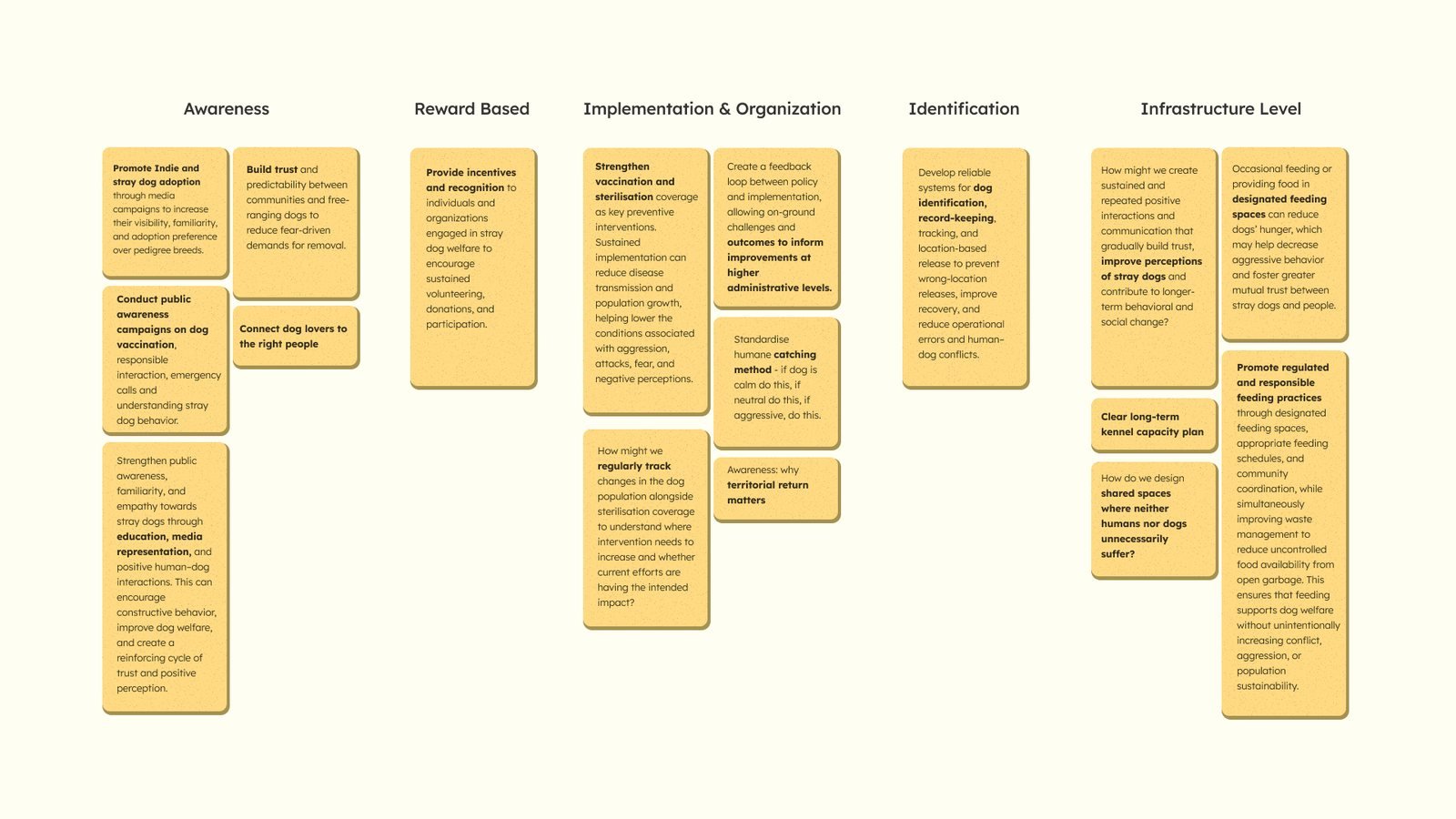
The final synthesis wasn't a single proposal but a set of leverage points, spanning awareness, incentives, identification and infrastructure, mapped against where the system could realistically absorb change.
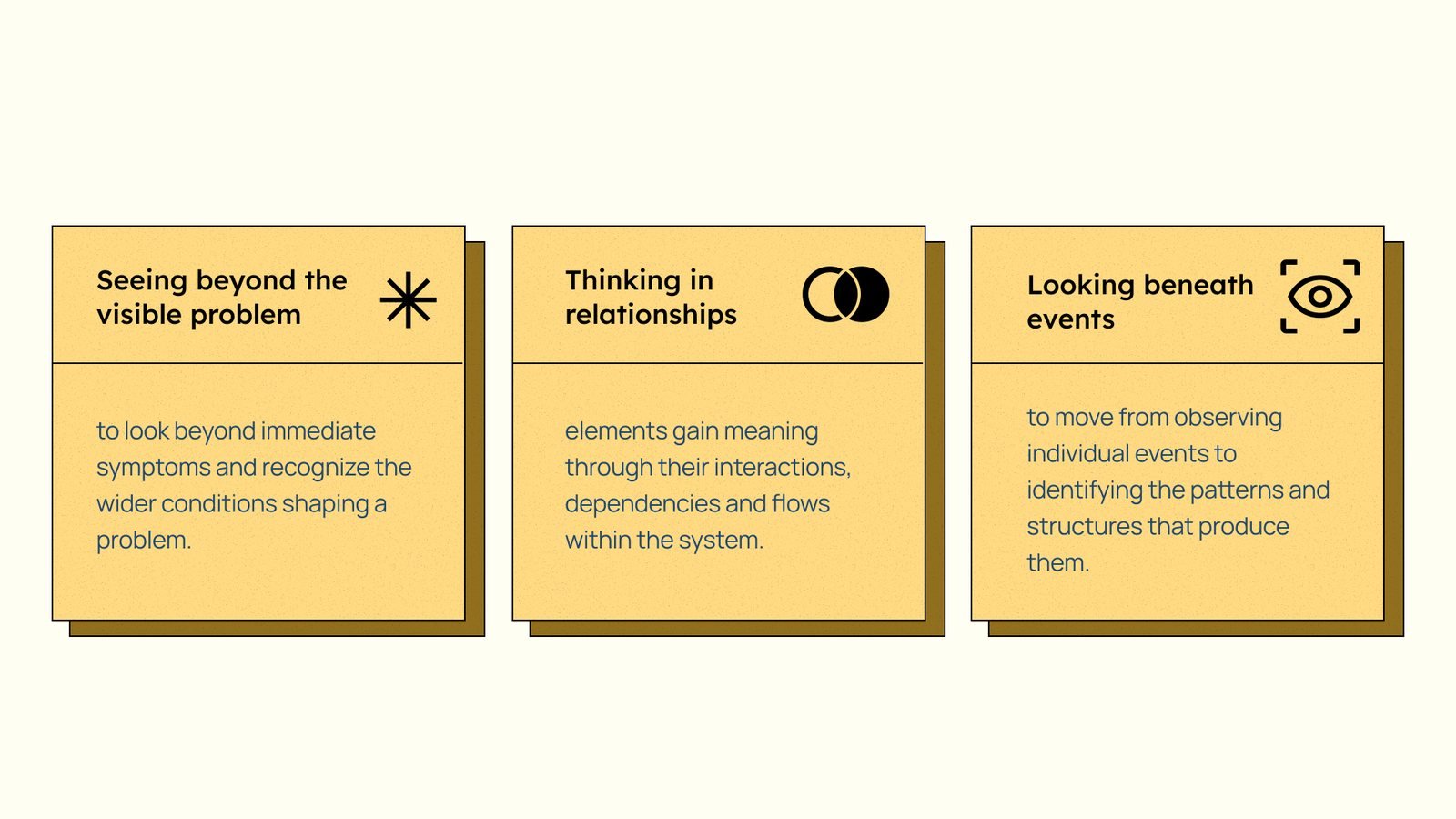
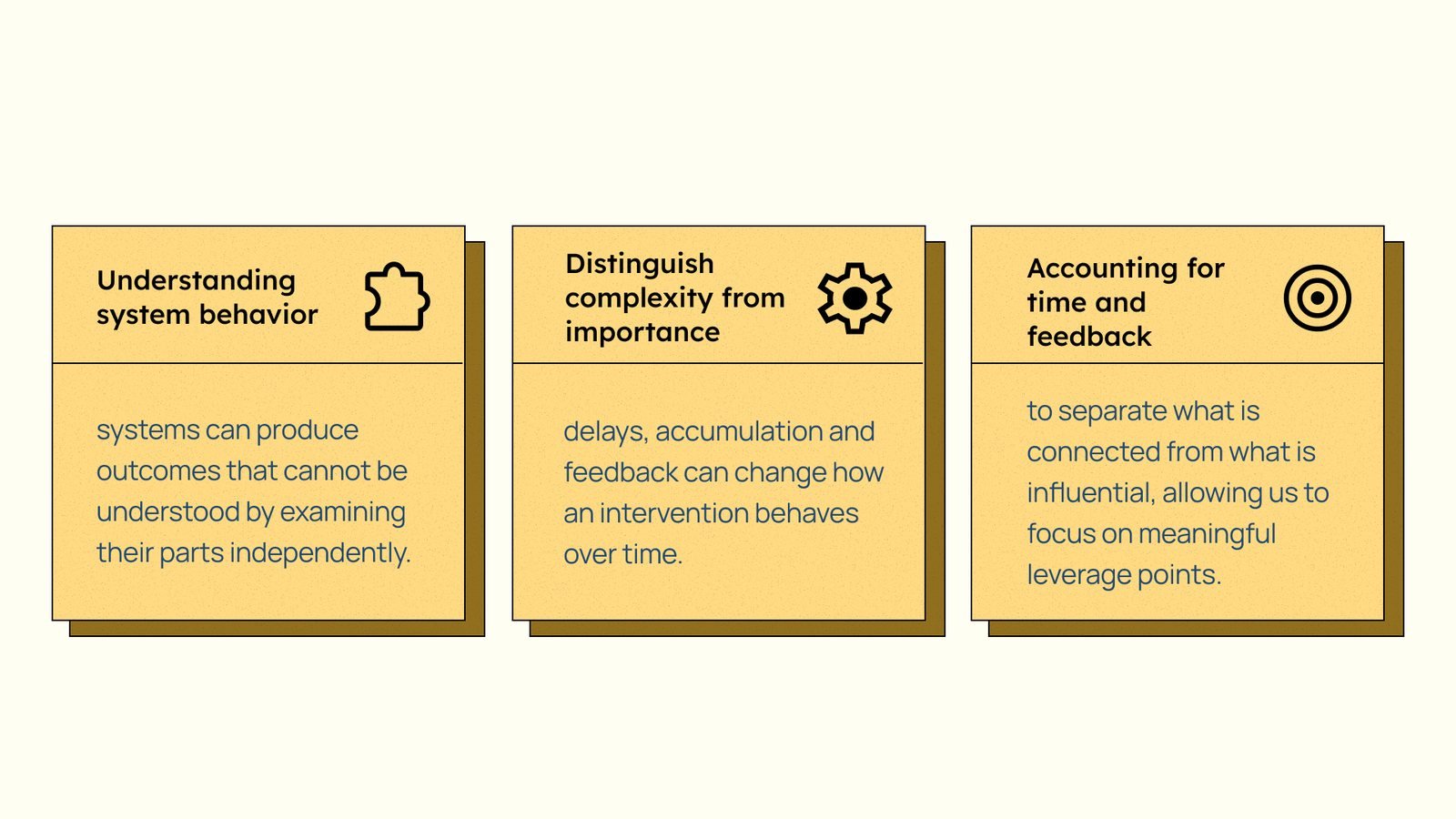
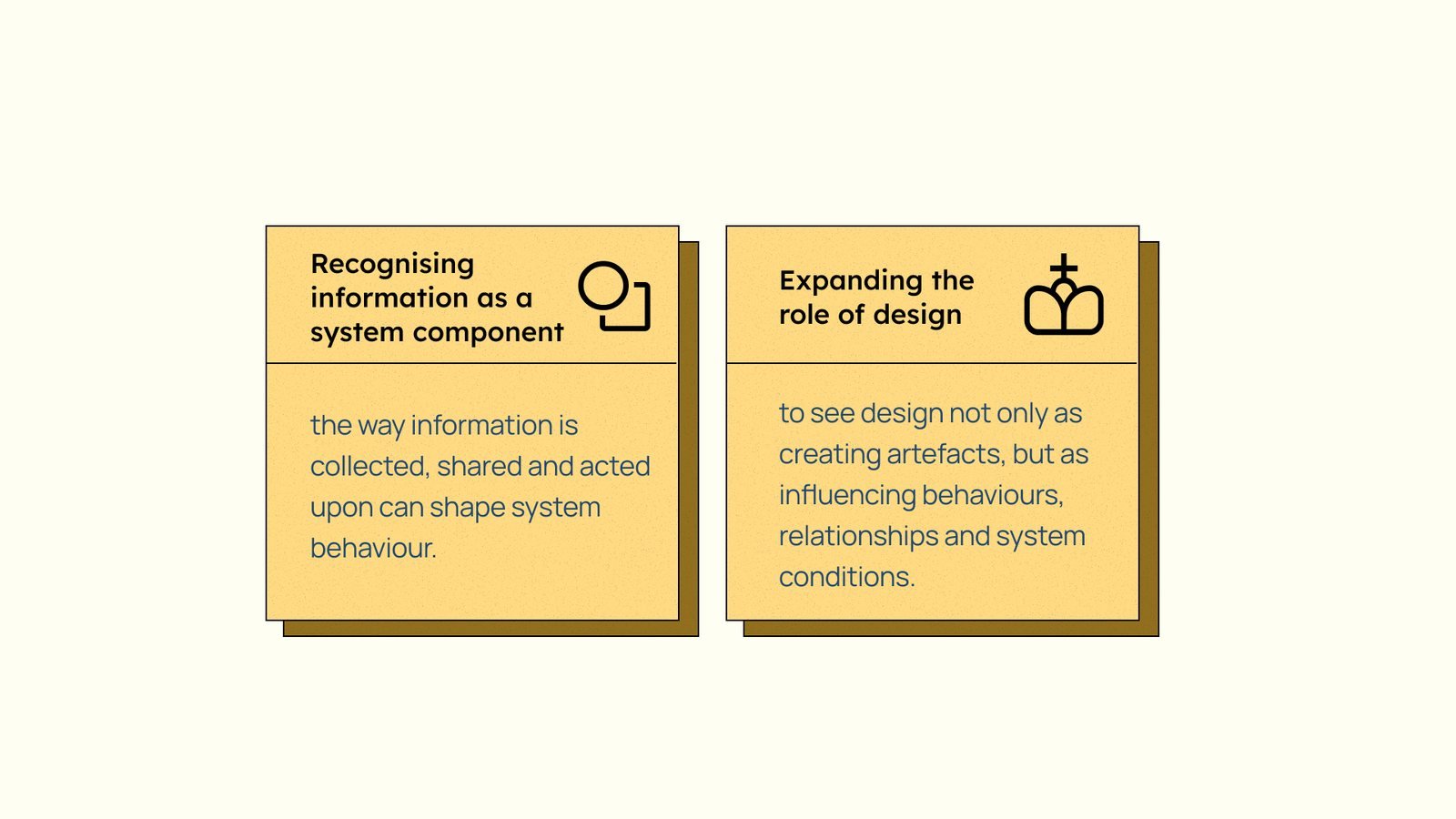
The biggest shift was in what counted as a design outcome: not a single artefact, but a clearer view of the relationships, information flows and feedback that shape behaviour across the whole system.